What Is Watership Down a Metaphor For? Meaning, Themes
MetaphorCraftz.com >> Uncategorized>> What Is Watership Down a Metaphor For? Meaning, Themes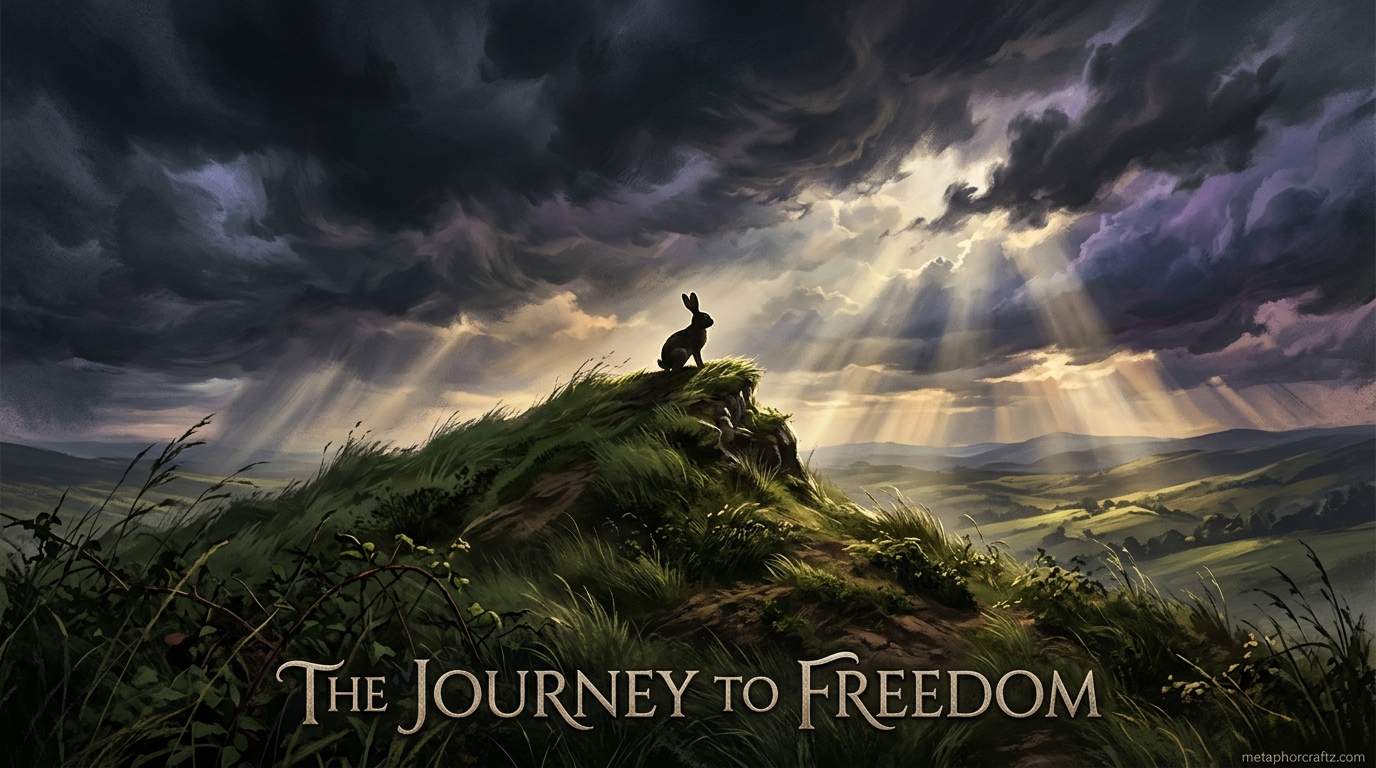
What Is Watership Down a Metaphor For? Meaning, Themes
What is Watership Down a metaphor for? At first, it may seem like a simple story about rabbits searching for a safe place to live.
But beneath its exciting adventures lies a much deeper message about human life.
Written by Richard Adams, Watership Down follows a group of rabbits who leave their home after one of them senses that danger is coming.
They face fear, loss, powerful enemies, and many difficult choices as they search for a new home.
Although the characters are rabbits, their experiences reflect many parts of human society. Their journey explores freedom, courage, friendship, leadership, survival, and the desire to live without fear.
Readers often ask about the meaning of the story because its animal characters represent familiar human struggles.
The book also raises questions about power, dictatorship, war, community, and what makes a good leader.
In this updated 2026 guide, you will discover what Watership Down symbolizes, what its main characters represent, and how its important themes connect to real life.
You will also learn why this classic story remains meaningful to readers of different ages.
Definition & Meaning

Watership Down is often read as a metaphor for the human search for freedom, safety, belonging, and a better life. Through the rabbits’ struggles, Richard Adams explores how people respond to danger, how leaders use power, and why a caring community matters.
What does Watership Down mean in simple words?
The novel tells the story of rabbits who leave their old home because they believe it is no longer safe. They travel across the countryside and face many dangers before building a new home.
Their journey can represent the struggles people face when they leave an unsafe situation and try to create a better future.
The rabbits are animals, but their feelings and choices reflect human experiences.
Quick explanation
| Story element | Possible meaning |
|---|---|
| The journey | The struggles of life |
| Watership Down | Freedom, safety, and a fresh start |
| The rabbits | People and human communities |
| Hazel | Wise and caring leadership |
| Fiver | Intuition, insight, and warning |
| Bigwig | Courage and strength |
| General Woundwort | Dictatorship and the abuse of power |
| Efrafa | An oppressive society |
| The journey home | Hope, belonging, and personal growth |
These are literary interpretations, not a fixed code created by the author.
Is Watership Down really a metaphor?
There is an important distinction here. Richard Adams did not intend the novel to be a direct political or religious allegory. In a 2015 interview with The Guardian, he said that it was meant to be a story about rabbits, not a parable. The Guardian+1
However, readers can still find deeper meanings in the characters and events. A story does not need to be written as an allegory to reflect real human experiences.
Why Do We Use Watership Down as a Metaphor?
People use Watership Down as a metaphor because its fictional rabbit society reflects familiar problems in human life. It gives readers a way to discuss freedom, political control, courage, leadership, friendship, and survival through an animal adventure.
The novel is especially useful when discussing literature, human behavior, and society.
1. To explain the struggle for freedom
The rabbits leave a place where their future is threatened. Their journey shows why freedom can be worth taking risks for.
Example: “The rabbits’ journey in Watership Down represents the struggle for freedom.”
2. To explain good and bad leadership
Hazel and Woundwort show two very different ways to lead. One values cooperation, while the other depends on fear and control.
Example: “Hazel and Woundwort represent opposite approaches to leadership.”
3. To discuss human society
The different warrens provide a way to examine how communities are organized and how people respond to power.
Example: “The different rabbit warrens reflect different forms of human society.”
4. To explain courage and survival
The rabbits face danger, but they continue because they believe a better future is possible.
Example: “Their journey is a metaphor for overcoming life’s challenges.”
5. To teach students about symbolism
The novel helps students understand how animal characters, places, and events can carry meanings beyond the literal story.
Example: “Watership Down uses animal characters to explore human experiences.”
6. To discuss friendship and teamwork
The rabbits cannot succeed through individual strength alone. They need to trust one another and share their abilities.
Example: “The rabbits show how teamwork can help a community survive.”
Main Section: 7 Powerful Meanings of Watership Down

The seven interpretations below explain the novel’s strongest connections to human life. They are based on its plot, characters, and recurring themes rather than a claim that every rabbit or event has one official meaning. Each interpretation offers a useful way to understand the story.
1. Watership Down Is a Metaphor for Freedom
Meaning: Freedom means having the ability to make choices and live without unfair control.
Real explanation:
One of the strongest themes in the novel is the desire to live freely.
The rabbits leave Sandleford Warren because they sense that danger is coming. They do not want to remain somewhere that may destroy their future.
Their search for a new home represents the human desire to escape oppression and find a place where life can be lived peacefully.
Watership Down becomes a place where the rabbits can build their own community.
Sample sentence:
“Watership Down represents the freedom people seek when they escape an oppressive society.”
When to use this interpretation:
- When discussing freedom in literature.
- When writing about personal independence.
- When explaining the difference between freedom and control.
When NOT to use it:
Do not claim that the novel is only about political freedom. It also explores nature, friendship, survival, and belonging.
Alternative expressions:
- The search for independence.
- The struggle against oppression.
- The desire for a free life.
Difficulty level: Easy.
Tone: Neutral / Academic.
2. Watership Down Is a Metaphor for Survival
Meaning: Survival is the struggle to stay alive and overcome dangerous situations.
Real explanation:
The rabbits face predators, human activity, hunger, exhaustion, and hostile groups.
Their journey shows that survival requires more than physical strength. It also requires intelligence, planning, patience, and cooperation.
The rabbits must learn to adapt when their plans fail.
This reflects human life because people also face unexpected challenges that require courage and careful decisions.
Sample sentence:
“The rabbits’ dangerous journey represents the struggle for survival in a difficult world.”
When to use this interpretation:
- When discussing challenges and resilience.
- When writing about overcoming difficult situations.
- When analyzing adventure and survival stories.
When NOT to use it:
Do not describe survival as the only message. The rabbits are not simply trying to stay alive; they also want a meaningful and peaceful community.
Alternative expressions:
- The fight for existence.
- Overcoming adversity.
- The struggle to stay alive.
Difficulty level: Easy.
Tone: Neutral.
3. Watership Down Is a Metaphor for Dictatorship and Abuse of Power
Meaning: Dictatorship is a system in which one powerful leader controls others, often through fear and punishment.
Real explanation:
General Woundwort rules Efrafa through strict control. The rabbits have limited freedom, and their daily lives are controlled by a powerful authority.
Woundwort believes that order and strength are more important than individual choice.
His leadership contrasts with Hazel’s approach. Hazel listens to others and values cooperation.
This difference allows readers to examine how power can protect a community or destroy its freedom.
Sample sentence:
“Efrafa represents a society where dictatorship and fear take away individual freedom.”
When to use this interpretation:
- When discussing political power.
- When comparing democratic and authoritarian leadership.
- When writing about freedom and human rights.
When NOT to use it:
Do not say that Efrafa represents one specific historical country or political leader unless you provide evidence. The novel allows broader interpretations.
Alternative expressions:
- Authoritarian control.
- Oppressive government.
- Abuse of authority.
Difficulty level: Medium.
Tone: Formal / Academic.
4. Watership Down Is a Metaphor for Friendship and Teamwork
Meaning: Friendship and teamwork mean helping one another and working together toward a shared goal.
Real explanation:
Hazel’s group contains rabbits with different strengths and abilities.
Some are brave, some are clever, and others are better at noticing danger. Their differences become an advantage when they work together.
Hazel understands that a good leader does not need to do everything alone.
The group succeeds because its members trust one another and contribute what they can.
This is a powerful lesson about human relationships and teamwork.
Sample sentence:
“The rabbits’ friendship represents the power of teamwork during difficult times.”
When to use this interpretation:
- When writing about friendship.
- When discussing teamwork in school.
- When explaining the importance of community.
When NOT to use it:
Do not suggest that friendship removes every danger. The rabbits still experience loss and conflict.
Alternative expressions:
- The strength of unity.
- Cooperation and trust.
- Supporting one another.
Difficulty level: Easy.
Tone: Neutral / Positive.
5. Watership Down Is a Metaphor for Hope and New Beginnings
Meaning: Hope is the belief that life can improve, even when the present situation is difficult.
Real explanation:
The rabbits leave their old home without knowing exactly what will happen next.
They face uncertainty, but they continue their journey because they believe another place may offer a better life.
Watership Down becomes a symbol of that hope.
Their experience reflects the way people sometimes need to leave familiar surroundings to find new opportunities.
Sample sentence:
“Watership Down symbolizes hope and the possibility of starting a better life.”
When to use this interpretation:
- When discussing personal growth.
- When writing about change.
- When explaining the meaning of a fresh start.
When NOT to use it:
Do not describe the journey as easy or painless. Hope in the novel exists alongside fear, danger, and sacrifice.
Alternative expressions:
- A fresh beginning.
- A brighter future.
- The promise of a better life.
Difficulty level: Easy.
Tone: Neutral / Inspirational.
6. Watership Down Is a Metaphor for the Search for Home and Belonging
Meaning: Home is more than a physical place. It is somewhere people feel safe, accepted, and connected to others.
Real explanation:
The rabbits do not simply need a place to sleep. They need a community where they can live together and build a future.
Their experience shows that having shelter does not always mean having a real home.
For example, the rabbits in Cowslip’s warren have food and protection, but their community is built around a hidden danger.
Efrafa also provides a form of protection, but it takes away freedom.
The new warren becomes meaningful because the rabbits can build a community based on trust and cooperation. SparkNotes+1
Sample sentence:
“Watership Down represents the human search for a place where people truly belong.”
When to use this interpretation:
- When discussing family and belonging.
- When writing about community.
- When explaining the meaning of home.
When NOT to use it:
Do not reduce home to a building or location. The emotional connections between the rabbits are just as important.
Alternative expressions:
- The search for belonging.
- A place of safety and acceptance.
- Finding a true home.
Difficulty level: Easy.
Tone: Neutral / Emotional.
7. Watership Down Is a Metaphor for Environmental Destruction
Meaning: Environmental destruction happens when human actions damage nature and threaten the lives of animals and other living things.
Real explanation:
The rabbits’ original home faces danger because of human activity.
Their story reminds readers that animals depend on their natural habitats to survive.
When people destroy forests, fields, and other natural spaces, animals lose the places where they find food, shelter, and safety.
The novel encourages readers to think about the relationship between humans and the natural world.
Sample sentence:
“Watership Down can be read as a warning about environmental destruction and the loss of natural habitats.”
When to use this interpretation:
- When discussing wildlife protection.
- When writing about nature and conservation.
- When studying environmental themes in literature.
When NOT to use it:
Do not claim that every event in the novel is a direct environmental message. The story also explores many social and personal themes.
Alternative expressions:
- The destruction of wildlife habitats.
- The human impact on nature.
- The struggle to protect the natural world.
Difficulty level: Medium.
Tone: Formal / Educational.
What Do the Main Characters in Watership Down Represent?
The main characters can be understood as different human qualities and approaches to life. Hazel represents thoughtful leadership, Fiver represents intuition, Bigwig represents courage, and Woundwort represents power without compassion. These interpretations help explain why the characters feel familiar even though they are rabbits.
Character symbolism and literary interpretation
Hazel – Wise Leadership
Hazel represents kindness, responsibility, and the ability to lead through cooperation. He understands that listening to others is an important part of leadership.
Fiver – Intuition and Insight
Fiver represents sensitivity and the ability to recognize danger before others do. His visions encourage the group to pay attention to warnings.
Bigwig – Courage and Strength
Bigwig represents bravery, loyalty, and physical strength. He is willing to face danger to protect the rabbits he cares about.
General Woundwort – Tyranny and Control
Woundwort represents a leader who uses fear and force to control others. His character shows the dangers of power without compassion.
Blackberry – Intelligence and Creativity
Blackberry represents practical thinking and problem-solving. His ideas help the group overcome difficult situations.
Kehaar – Friendship Beyond Differences
Kehaar represents unexpected friendship and cooperation between different kinds of creatures.
These character meanings are interpretations, not official labels assigned by Richard Adams.
What Do the Different Warrens Symbolize?
The three important rabbit communities show different ways of living together. Sandleford faces danger, Cowslip’s warren hides an uncomfortable truth, and Efrafa uses strict control. Hazel’s new community offers a different possibility: a society built around cooperation, freedom, and shared responsibility. SparkNotes+2
| Warren | What happens | Possible symbolism |
|---|---|---|
| Sandleford | The rabbits must escape danger | An unsafe or failing community |
| Cowslip’s warren | Comfort hides a deadly threat | False security and denial |
| Efrafa | Woundwort controls the rabbits | Dictatorship and oppression |
| Watership Down | The rabbits build a new community | Freedom, belonging, and cooperation |
Why is Efrafa important?
Efrafa is one of the clearest examples of power being used to control a community.
Woundwort creates strict rules to protect the rabbits from danger, but his system also removes their ability to live freely.
This raises an important question: Is a society truly safe if its people have no freedom?
Why is Cowslip’s warren important?
Cowslip’s warren looks comfortable from the outside. The rabbits have food and shelter, but they live with a dangerous secret.
This community can represent people who accept an attractive situation without asking what it costs them.
It teaches readers that comfort is not always the same as happiness or safety.
Quick Reference Table: What Is Watership Down a Metaphor For?
The following table summarizes the seven major interpretations and their connections to the novel. It is useful for students, teachers, book reports, literary analysis, and quick revision.
| Metaphor or theme | What it represents | Related character or event |
|---|---|---|
| Freedom | Living without oppression | Escape from Sandleford |
| Survival | Facing danger and hardship | The rabbits’ journey |
| Dictatorship | Power through fear | General Woundwort |
| Friendship | Trust and support | Hazel’s group |
| Hope | A better future | Reaching Watership Down |
| Belonging | Finding a true home | Building the new warren |
| Environmental destruction | Loss of natural habitats | Human activity near Sandleford |
| Wise leadership | Serving and listening to others | Hazel |
| Intuition | Recognizing danger | Fiver |
| Courage | Facing fear | Bigwig |
| Intelligence | Creative problem-solving | Blackberry |
| Cooperation | Working across differences | Kehaar helping the rabbits |
Real-Life Conversations About Watership Down
These sample conversations show how students, teachers, friends, and readers might naturally discuss the novel and its deeper meanings.
Conversation 1: Two Friends Discuss the Book
Alex: Have you read Watership Down?
Sam: Yes! I thought it was just a story about rabbits.
Alex: That’s what I thought at first, too. But I think it has a deeper meaning.
Sam: Like what?
Alex: I think it represents the struggle for freedom and a better life.
Sam: That makes sense, especially when they escape from Efrafa.
Conversation 2: A Teacher Explains the Metaphor
Student: Why does the writer use rabbits instead of people?
Teacher: Rabbits allow the writer to tell an exciting animal story while exploring human problems.
Student: So the rabbits represent people?
Teacher: They can reflect human experiences, yes. Their struggles help us understand leadership, friendship, and survival.
Conversation 3: A Family Discussion
Mother: What did you learn from the story?
Daughter: I learned that Hazel is a good leader.
Mother: Why do you think that?
Daughter: Because he listens to everyone instead of forcing them to follow him.
Mother: That’s a wonderful lesson. Good leaders respect others.
Conversation 4: Students Preparing an Assignment
Ali: What should we write about the meaning of Watership Down?
Sara: We can explain that it represents freedom and belonging.
Ali: Should we mention Woundwort?
Sara: Definitely. He shows how leaders can misuse power.
Ali: Great! That gives us a strong comparison.
Conversation 5: An Online Book Discussion
Is Watership Down really a political story?
I think it has political themes, especially through Efrafa.
But didn’t Richard Adams say it was just a story about rabbits?
Yes. I think both things can be true. He intended an adventure story, but readers can still find social meaning in it.
Everyday Usage: How to Discuss Watership Down’s Metaphors
People use Watership Down in everyday discussions, school assignments, book reviews, and literary analysis to explain how a fictional story can reflect real human experiences. Its themes provide useful examples of symbolism, character development, political control, friendship, and the search for belonging.
1. In Everyday Conversation
People may discuss the novel when talking about freedom, courage, or difficult life decisions.
Example:
“Sometimes leaving a comfortable place is necessary to find a better future. That’s one lesson I take from Watership Down.”
2. In Writing
Writers can use the novel as an example of how animal stories explore human problems.
Example:
“Richard Adams uses the rabbits’ journey to explore freedom, leadership, and the importance of community.”
3. In Books and Literary Analysis
Students can compare Watership Down with other novels that use animals to explore human behavior.
Example:
“Like many animal stories, Watership Down explores human nature through nonhuman characters.”
4. In Movies and Television
The 1978 animated film and the 2018 television adaptation offer different ways to experience the story.
Example:
“The story’s conflict between Hazel and Woundwort highlights the difference between cooperative leadership and authoritarian control.”
5. In Poetry
Writers can use the novel’s journey as inspiration for poems about hope, freedom, and finding a place to belong.
Example:
“Like the rabbits searching for Watership Down, we all seek a place where our hearts can rest.”
6. In School Assignments
Students can explain the novel’s themes in essays, reading responses, and classroom discussions.
Example:
“Watership Down is a story about rabbits, but it also reflects human struggles for freedom and survival.”
7. On Social Media
Readers can share short thoughts about the novel’s lessons.
Instagram caption:
“Sometimes the bravest thing you can do is leave a place that no longer feels like home. #WatershipDown”
Facebook post:
“Watership Down reminds us that true leadership comes from trust, courage, and respect.”
X post:
“Freedom means more than safety. Watership Down shows why both matter.”
LinkedIn post:
“One leadership lesson from Watership Down: Strong leaders listen, build trust, and help their communities succeed.”
8. In Emails and Text Messages
Students and teachers can use the novel as a reference when discussing literature.
Example email:
“Dear Teacher,
I believe Watership Down explores freedom, survival, and leadership through the experiences of its rabbit characters. Hazel and Woundwort provide an interesting comparison between two different leadership styles.
Best regards.”
Example text message:
“I finished Watership Down! I didn’t expect a rabbit story to have so many meaningful lessons about human life.”
FAQs:
1. What is the main message of Watership Down?
The main message is that freedom, courage, cooperation, and hope are important in building a better life. The rabbits show that survival requires more than strength. It also requires trust, intelligence, and good leadership.
2. Is Watership Down a metaphor for communism?
Some readers interpret the different warrens as representations of political systems. Efrafa is often compared to an authoritarian state because Woundwort controls the rabbits through fear. However, Adams rejected the idea that his novel was written as a direct political allegory. The Guardian+1
3. What does General Woundwort symbolize?
General Woundwort can symbolize dictatorship, excessive ambition, and the abuse of power. He believes that strict control is necessary, even when it takes away the freedom and happiness of others.
4. What does Hazel represent in Watership Down?
Hazel represents thoughtful leadership, kindness, courage, and responsibility. He succeeds because he listens to his companions, recognizes their strengths, and makes decisions for the benefit of the group.
5. What does Fiver symbolize?
Fiver represents intuition, sensitivity, and insight. His warnings help the rabbits recognize danger before it becomes obvious to everyone else.
6. What does Watership Down itself symbolize?
Watership Down can symbolize a safe home, freedom, hope, and belonging. It represents the rabbits’ dream of building a community where they can live peacefully.
7. Is Watership Down an allegory?
It can be interpreted allegorically, but its author did not intend it as a direct allegory. Adams described it as a story about rabbits. Readers can still explore its political, social, and philosophical themes.
8. What does Efrafa represent?
Efrafa represents an oppressive society where authority controls people’s lives. Its strict rules and General Woundwort’s leadership show the dangers of valuing power over individual freedom.
9. Is Watership Down about war?
War is not the only subject of the novel, but conflict, violence, military organization, and survival are important parts of the story. These elements can remind readers of human wars and struggles for power.
10. What lesson does Watership Down teach students?
The novel teaches students about courage, friendship, teamwork, responsibility, freedom, and the importance of good leadership. It also encourages readers to think critically about power and the meaning of a true home.
11. Why is Watership Down considered a classic?
It combines adventure, memorable characters, emotional storytelling, and meaningful themes. Its appeal reaches both younger and older readers because its questions about life and society remain relevant.
12. What is the difference between a metaphor and an allegory in Watership Down?
A metaphor connects one thing to another to express a deeper meaning. An allegory is a story in which characters and events consistently represent wider ideas. Watership Down is often read through both approaches, although Adams did not intend it as a direct allegory.
Conclusion:
So, what is Watership Down a metaphor for? It can represent the human struggle for freedom, survival, hope, friendship, and a place to call home.
Through Hazel, readers discover the value of wise leadership. Through Fiver, they learn to pay attention to warning signs.
And through General Woundwort, they understand how fear and excessive control can destroy a community.
The most meaningful lesson is that a good life requires more than safety. People also need freedom, trust, friendship, and a sense of belonging.
Although Richard Adams intended to tell an exciting story about rabbits, its characters and events continue to inspire deeper discussions about human life.
Discover more post:
| https://metaphorcraftz.com/st-patrick-snakes-metaphor-for-pagans/ |
| https://metaphorcraftz.com/metaphor-for-red-eyes/ |
| https://metaphorcraftz.com/metaphor-for-calming-down/ |

Vivienne is a passionate English language writer, literary enthusiast, and content creator with over 5 years of experience in writing about metaphors, figurative language, literary devices, and the deeper meanings behind everyday expressions.
Related Post

Metaphors for Finding Something Rare: Powerful Examples
metaphor for finding something rare can be hard to describe with plain words. A good…