
Metaphor for Being Brave: Powerful Examples With Meanings
MetaphorCraftz.com >> Uncategorized>> Metaphor for Being Brave: Powerful Examples With Meanings
Metaphor for Being Brave: Powerful Examples With Meanings
A metaphor for being brave describes courage by comparing it to something strong, bold, or fearless without using the words like or as.
These metaphors can make courage easier to understand and more vivid.
This guide gives you simple examples for conversations, schoolwork, creative writing, social media, poetry, and everyday speech.
Definition & Meaning
A metaphor for being brave is a creative comparison that shows courage through an image or idea. Instead of simply saying “she was brave,” you might say “she was a lion in the storm.” The comparison helps readers picture courage as strength, action, confidence, or the choice to face fear.
Simple definition
A bravery metaphor compares a brave person, action, or feeling to something that represents courage.
For example:
“He was a lion in the face of danger.”
The person is not literally a lion. The lion represents strength, courage, and confidence.
Quick explanation
Good metaphors for bravery often use images such as:
- lions
- shields
- fire
- mountains
- storms
- warriors
- anchors
- light
- steel
- wings
- bridges
- stars
The best metaphor depends on the kind of bravery you want to describe. Physical courage, emotional courage, and quiet courage do not always need the same image.
Quick meaning table
| Metaphor idea | What it suggests |
|---|---|
| A lion | Bold and fearless |
| A shield | Protecting others |
| A mountain | Strength and endurance |
| A flame | Inner courage |
| An anchor | Steady courage |
| Steel | Mental strength |
| A warrior | Readiness to face a challenge |
| A bridge | Courage to move forward |
| A lighthouse | Courage that guides others |
| Wings | Courage to take a risk |
Why We Use a Metaphor for Being Brave

We use metaphors for bravery because the word brave can feel too general. A metaphor gives courage a clear picture. It can show what bravery looks like, how it feels, or what a person does when afraid. This makes speech and writing more emotional, memorable, and precise.
Practical purpose
A metaphor can turn a simple sentence into a stronger one.
Plain:
Maya was brave.
With a metaphor:
Maya was a flame that refused to go out.
The second sentence suggests that Maya stayed strong during a difficult time.
Everyday usage
People use bravery metaphors when talking about:
- facing fear
- standing up for someone
- trying something new
- dealing with failure
- speaking in public
- making a hard choice
- protecting someone
- starting again
Writing
Metaphors are especially useful in stories, essays, poems, speeches, and personal writing because they help readers feel the idea instead of only understanding it.
Speaking
In normal conversation, simple metaphors can make your message more natural:
“She’s a rock when things get tough.”
“You’ve got a warrior’s heart.”
School
Students can use bravery metaphors in creative writing, descriptive paragraphs, essays, poems, and speeches.
Social media
Short metaphors work well in captions and motivational posts:
“Fear knocked. Courage opened the door.”
Professional communication
In a speech or presentation, a metaphor can make an idea easier to remember:
“Good leaders are lighthouses in rough seas.”
Main Section
The following 60 metaphors for being brave cover different kinds of courage. Each example explains the image, gives a natural sentence, and shows when the expression works best.
1. A Lion
Meaning: A lion represents strength, confidence, and courage.
Real explanation: This metaphor suggests that someone faces fear with boldness.
Sample sentence: She was a lion when everyone else stepped back.
When to use it: Stories, speeches, motivation.
When NOT to use it: Very formal technical writing.
Alternatives: fearless leader; brave soul; bold spirit.
Difficulty: Easy
Tone: Neutral
2. A Shield
Meaning: A shield represents protective courage.
Real explanation: It fits someone who stands between danger and another person.
Sample sentence: His courage became a shield for his family.
When to use it: Protection and sacrifice.
When NOT to use it: When courage has nothing to do with helping others.
Alternatives: guardian; protector; wall of strength.
Difficulty: Easy
Tone: Neutral
3. A Flame
Meaning: A flame represents inner courage that continues burning.
Real explanation: It suggests that fear cannot easily destroy someone’s determination.
Sample sentence: Her courage was a small flame in the darkness.
When to use it: Emotional writing and poetry.
When NOT to use it: Plain business communication.
Alternatives: spark of courage; burning spirit; inner fire.
Difficulty: Easy
Tone: Poetic
4. A Mountain
Meaning: A mountain represents strength and endurance.
Real explanation: Mountains remain firm through storms, making them useful symbols of courage.
Sample sentence: His courage stood like a mountain against every setback.
When to use it: Long struggles.
When NOT to use it: Very short, casual messages.
Alternatives: pillar; stronghold; rock.
Difficulty: Easy
Tone: Neutral
5. A Rock
Meaning: A rock represents steady strength.
Real explanation: Someone described as a rock stays calm when others feel afraid.
Sample sentence: During the crisis, Nina was a rock for everyone.
When to use it: Emotional support.
When NOT to use it: To describe sudden, dramatic bravery.
Alternatives: anchor; pillar; steady hand.
Difficulty: Easy
Tone: Neutral
6. A Shield of Steel
Meaning: Strong protection and mental toughness.
Real explanation: Steel adds the idea of strength to the protective image.
Sample sentence: His courage was a shield of steel.
When to use it: Dramatic writing.
When NOT to use it: Gentle or playful situations.
Alternatives: iron wall; steel heart; strong defense.
Difficulty: Easy
Tone: Strong
7. A Warrior
Meaning: A warrior represents someone ready to face a challenge.
Real explanation: The metaphor focuses on determination rather than literal fighting.
Sample sentence: She entered the room with the heart of a warrior.
When to use it: Challenges and personal growth.
When NOT to use it: Situations where military imagery feels inappropriate.
Alternatives: fighter; champion; battler.
Difficulty: Easy
Tone: Strong
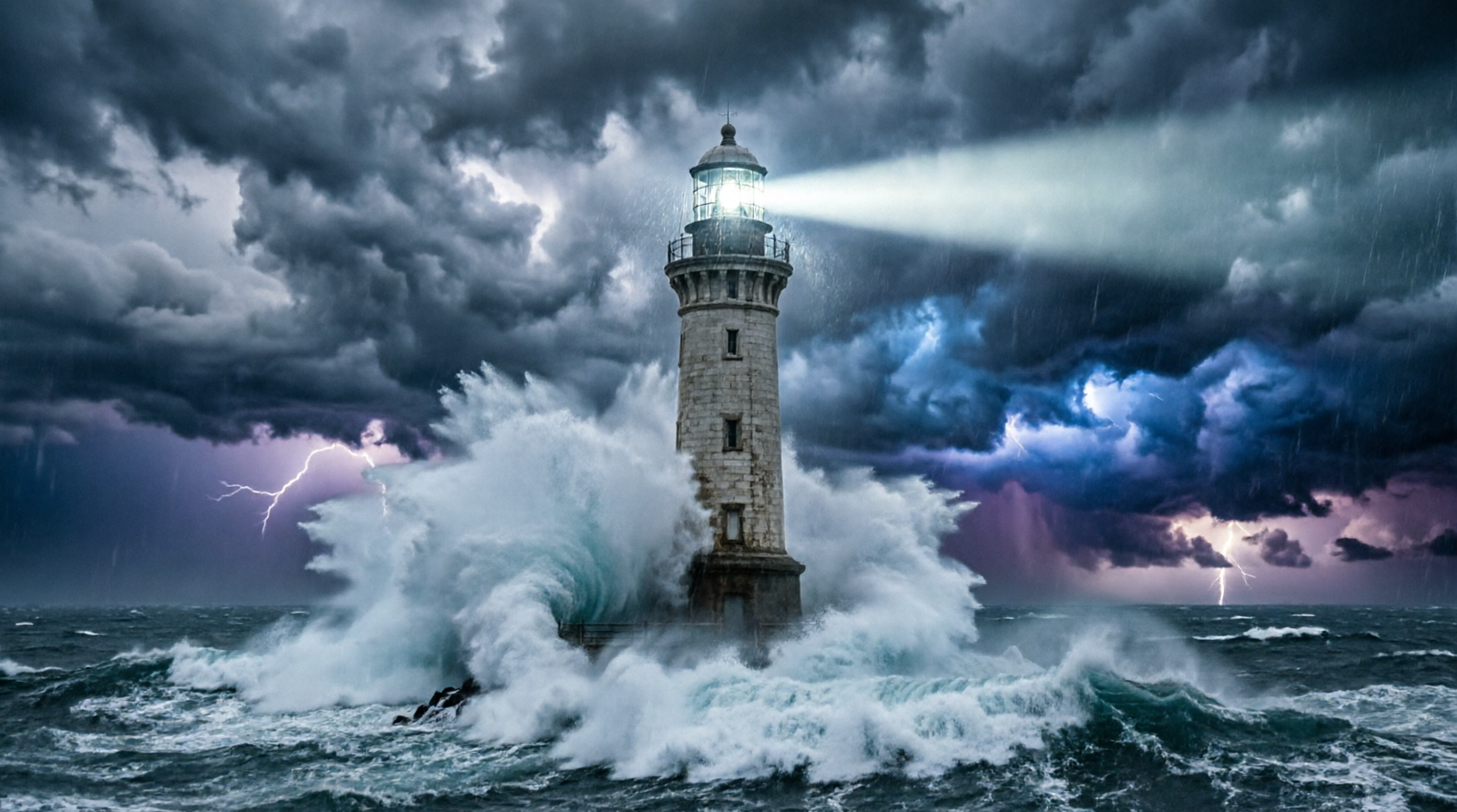
8. A Lighthouse
Meaning: A lighthouse represents courage that guides others.
Real explanation: It suggests someone remains strong and helps others find their way.
Sample sentence: Her courage was a lighthouse for the frightened team.
When to use it: Leadership.
When NOT to use it: A very simple casual sentence.
Alternatives: guiding light; beacon; bright star.
Difficulty: Medium
Tone: Poetic
9. A Beacon
Meaning: A beacon represents hope and courage during difficulty.
Real explanation: The image focuses on bravery that gives other people direction.
Sample sentence: His brave words became a beacon of hope.
When to use it: Speeches and inspirational writing.
When NOT to use it: Basic everyday requests.
Alternatives: guiding light; signal; source of hope.
Difficulty: Medium
Tone: Formal
10. A Stormbreaker
Meaning: A stormbreaker represents someone who faces trouble head-on.
Real explanation: The storm represents hardship, while breaking it suggests courage.
Sample sentence: She became a stormbreaker when trouble arrived.
When to use it: Creative writing.
When NOT to use it: Formal reports.
Alternatives: storm fighter; trouble breaker; force of courage.
Difficulty: Medium
Tone: Dramatic
11. A Fire in the Dark
Meaning: Courage that remains alive during fear.
Real explanation: Darkness represents uncertainty, while fire represents hope and strength.
Sample sentence: His bravery was a fire in the dark.
When to use it: Emotional writing.
When NOT to use it: Scientific writing.
Alternatives: light in darkness; inner flame; spark of hope.
Difficulty: Easy
Tone: Poetic
12. A Strong Oak
Meaning: An oak represents lasting strength.
Real explanation: The image suggests someone stays firm despite pressure.
Sample sentence: She stood like a strong oak through every setback.
When to use it: Long-term courage.
When NOT to use it: Quick moments of bravery.
Alternatives: mighty tree; rooted strength; firm oak.
Difficulty: Easy
Tone: Neutral
13. A Steel Spine
Meaning: A steel spine represents strong determination.
Real explanation: The spine suggests inner support, while steel suggests toughness.
Sample sentence: He has a steel spine when others give up.
When to use it: Determination.
When NOT to use it: Describing physical health.
Alternatives: backbone of steel; iron will; strong backbone.
Difficulty: Medium
Tone: Strong
14. An Anchor
Meaning: An anchor represents calm courage.
Real explanation: An anchor holds firm even when waves become rough.
Sample sentence: Her courage was an anchor during the crisis.
When to use it: Calm bravery.
When NOT to use it: When describing fast action.
Alternatives: rock; foundation; steady force.
Difficulty: Easy
Tone: Neutral
15. A Rising Sun
Meaning: A rising sun represents hope after fear.
Real explanation: It works well for someone who finds courage after a dark period.
Sample sentence: His courage was a rising sun after a long night.
When to use it: New beginnings.
When NOT to use it: Immediate danger.
Alternatives: new dawn; morning light; fresh hope.
Difficulty: Easy
Tone: Poetic
16. A Brave Heart
Meaning: A brave heart represents deep emotional courage.
Real explanation: The heart is used as a symbol of feelings and inner strength.
Sample sentence: She carried a brave heart into the unknown.
When to use it: Personal writing.
When NOT to use it: Technical writing.
Alternatives: courageous spirit; fearless heart; bold soul.
Difficulty: Easy
Tone: Neutral
17. A Burning Torch
Meaning: A torch represents courage carried forward.
Real explanation: The image suggests someone keeps courage alive and passes hope to others.
Sample sentence: He carried the torch of courage for his team.
When to use it: Leadership and inspiration.
When NOT to use it: Casual everyday speech.
Alternatives: flame; beacon; guiding light.
Difficulty: Medium
Tone: Poetic
18. A Bridge Over Fear
Meaning: A bridge represents moving from fear toward action.
Real explanation: The metaphor shows courage as a way to cross a difficult gap.
Sample sentence: Courage became her bridge over fear.
When to use it: Personal growth.
When NOT to use it: Describing physical bravery alone.
Alternatives: path through fear; road to courage; step beyond fear.
Difficulty: Easy
Tone: Inspirational
19. Wings Against the Wind
Meaning: Wings represent the courage to move forward despite resistance.
Real explanation: The wind symbolizes obstacles.
Sample sentence: His courage gave him wings against the wind.
When to use it: Dreams and challenges.
When NOT to use it: Formal documents.
Alternatives: rising above fear; strong wings; flight through hardship.
Difficulty: Medium
Tone: Poetic
20. A Sword of Courage
Meaning: A sword represents the power to face fear.
Real explanation: The sword is symbolic rather than literal.
Sample sentence: Her words were a sword against fear.
When to use it: Fiction and dramatic speeches.
When NOT to use it: Sensitive professional contexts.
Alternatives: weapon against fear; blade of resolve; force of courage.
Difficulty: Medium
Tone: Dramatic
21. A Fortress
Meaning: A fortress represents strong emotional protection.
Real explanation: It suggests that fear cannot easily break someone’s confidence.
Sample sentence: His mind was a fortress against doubt.
When to use it: Mental strength.
When NOT to use it: Friendly casual conversation.
Alternatives: stronghold; safe wall; castle of courage.
Difficulty: Medium
Tone: Strong
22. A Bold Arrow
Meaning: An arrow represents direct movement toward a goal.
Real explanation: It suggests a person chooses a direction and does not turn back easily.
Sample sentence: Her courage was a bold arrow aimed at the future.
When to use it: Goals and ambition.
When NOT to use it: Calm emotional support.
Alternatives: straight path; determined step; focused force.
Difficulty: Medium
Tone: Creative
23. A Drumbeat
Meaning: A drumbeat represents courage that keeps going.
Real explanation: The steady beat suggests persistence.
Sample sentence: His courage was a drumbeat that never stopped.
When to use it: Poetry and speeches.
When NOT to use it: Technical writing.
Alternatives: steady rhythm; heartbeat; marching beat.
Difficulty: Medium
Tone: Poetic
24. A Wall Against Fear
Meaning: A wall represents resistance to fear.
Real explanation: The metaphor shows courage as a barrier that stops fear from controlling someone.
Sample sentence: Her courage became a wall against fear.
When to use it: Emotional strength.
When NOT to use it: When openness or kindness is the main idea.
Alternatives: barrier; shield; strong defense.
Difficulty: Easy
Tone: Neutral
25. A River Through Rocks
Meaning: A river represents courage that keeps moving around obstacles.
Real explanation: The river does not need to destroy every obstacle; it finds a way forward.
Sample sentence: His courage was a river flowing through rocks.
When to use it: Persistence.
When NOT to use it: Sudden acts of bravery.
Alternatives: steady stream; moving force; path through obstacles.
Difficulty: Medium
Tone: Poetic
26. A Climbing Rope
Meaning: A climbing rope represents courage during a difficult journey.
Real explanation: It suggests support, safety, and determination.
Sample sentence: Hope was her climbing rope when fear grew strong.
When to use it: Difficult personal journeys.
When NOT to use it: Simple everyday bravery.
Alternatives: lifeline; support; safety line.
Difficulty: Medium
Tone: Inspirational
27. A Key to Fear
Meaning: A key represents the ability to unlock courage.
Real explanation: It suggests courage gives someone a way past fear.
Sample sentence: Confidence became the key to his fear.
When to use it: Personal growth.
When NOT to use it: Literal explanations.
Alternatives: answer to fear; doorway to courage; way forward.
Difficulty: Easy
Tone: Neutral
28. A Door Opening
Meaning: An opening door represents taking a brave opportunity.
Real explanation: The metaphor focuses on choosing to step into the unknown.
Sample sentence: Her courage was a door opening into a new life.
When to use it: New experiences.
When NOT to use it: Physical danger.
Alternatives: open path; new doorway; chance to begin.
Difficulty: Easy
Tone: Neutral
29. A Seed Breaking Through Stone
Meaning: A seed represents courage that grows despite hardship.
Real explanation: The image shows life and determination overcoming something hard.
Sample sentence: His courage was a seed breaking through stone.
When to use it: Personal growth and recovery.
When NOT to use it: Short casual statements.
Alternatives: flower through cracks; growing strength; life through hardship.
Difficulty: Medium
Tone: Poetic
30. A Drum in the Silence
Meaning: A drum represents the courage to speak when others stay silent.
Real explanation: The sound breaks silence and demands attention.
Sample sentence: Her voice was a drum in the silence.
When to use it: Speaking up and advocacy.
When NOT to use it: Quiet personal courage.
Alternatives: voice in the dark; call for change; strong voice.
Difficulty: Medium
Tone: Poetic
31. A Compass
Meaning: A compass represents courage guided by values.
Real explanation: It suggests someone knows what is right and follows that direction.
Sample sentence: His courage was a compass when the choice became difficult.
When to use it: Moral courage.
When NOT to use it: Pure physical bravery.
Alternatives: moral guide; inner compass; guiding principle.
Difficulty: Easy
Tone: Neutral
32. A North Star
Meaning: A North Star represents courage guided by purpose.
Real explanation: The image suggests a clear goal during uncertain times.
Sample sentence: Her courage was a North Star in a confusing time.
When to use it: Leadership and purpose.
When NOT to use it: Quick action.
Alternatives: guiding star; bright guide; fixed point.
Difficulty: Easy
Tone: Poetic
33. A Horse Charging Forward
Meaning: A charging horse represents bold action.
Real explanation: It creates a strong picture of someone moving forward without letting fear stop them.
Sample sentence: He charged into the challenge with the heart of a horse.
When to use it: Dramatic storytelling.
When NOT to use it: Formal writing.
Alternatives: charging spirit; rushing forward; bold movement.
Difficulty: Medium
Tone: Dramatic
34. A Candle in a Storm
Meaning: A candle represents fragile but persistent courage.
Real explanation: The metaphor is powerful because the courage may be small, yet it continues despite difficulty.
Sample sentence: Her courage was a candle in a storm.
When to use it: Quiet bravery.
When NOT to use it: Aggressive or powerful courage.
Alternatives: tiny flame; light in trouble; small spark.
Difficulty: Easy
Tone: Poetic
35. A Tree With Deep Roots
Meaning: Deep roots represent inner strength.
Real explanation: The person may bend under pressure but does not easily fall.
Sample sentence: His courage had roots deeper than his fear.
When to use it: Long-term resilience.
When NOT to use it: A single brave action.
Alternatives: rooted strength; firm foundation; deep courage.
Difficulty: Easy
Tone: Poetic
36. A Heart of Steel
Meaning: A heart of steel represents emotional toughness.
Real explanation: It suggests someone remains strong under pressure.
Sample sentence: She faced the challenge with a heart of steel.
When to use it: Strong determination.
When NOT to use it: When kindness and softness are important.
Alternatives: steel spirit; iron heart; strong will.
Difficulty: Easy
Tone: Strong
37. An Iron Will
Meaning: An iron will represents powerful determination.
Real explanation: The metaphor focuses on refusing to quit.
Sample sentence: His iron will carried him through the hardest days.
When to use it: Persistence.
When NOT to use it: Gentle acts of courage.
Alternatives: strong resolve; firm will; unbreakable spirit.
Difficulty: Easy
Tone: Strong
38. A Firefighter of Fear
Meaning: This metaphor presents courage as something that puts out fear.
Real explanation: Fear is imagined as a fire that courage must control.
Sample sentence: She became a firefighter whenever fear threatened her dreams.
When to use it: Creative writing.
When NOT to use it: Formal essays unless explained.
Alternatives: fear fighter; fear breaker; flame stopper.
Difficulty: Medium
Tone: Creative
39. A Captain in Rough Seas
Meaning: A captain represents leadership during trouble.
Real explanation: Rough seas symbolize problems, while the captain stays responsible and focused.
Sample sentence: He was a captain in rough seas when the team needed direction.
When to use it: Leadership.
When NOT to use it: Personal fears unrelated to others.
Alternatives: steady captain; ship leader; guide through the storm.
Difficulty: Easy
Tone: Neutral
40. A Hand Reaching Into the Dark
Meaning: A hand reaching into darkness represents courage to help.
Real explanation: The metaphor focuses on reaching toward someone despite uncertainty.
Sample sentence: Her kindness was a hand reaching into the dark.
When to use it: Helping others.
When NOT to use it: Competitive situations.
Alternatives: helping hand; reaching light; hand of hope.
Difficulty: Easy
Tone: Emotional
41. A Mountain Climber
Meaning: A mountain climber represents someone who accepts difficult challenges.
Real explanation: The climb symbolizes effort, fear, and progress.
Sample sentence: He faced each problem like a mountain climber.
When to use it: Long goals.
When NOT to use it: A quick brave choice.
Alternatives: determined climber; trailblazer; brave traveler.
Difficulty: Easy
Tone: Neutral
42. A Trailblazer
Meaning: A trailblazer represents someone brave enough to go first.
Real explanation: This metaphor works well when someone enters an unfamiliar area or tries a new idea.
Sample sentence: She was a trailblazer who refused to follow fear.
When to use it: Innovation and leadership.
When NOT to use it: Simple acts of personal courage.
Alternatives: pioneer; pathfinder; first mover.
Difficulty: Easy
Tone: Professional
43. A Pathfinder
Meaning: A pathfinder represents courage to find a way forward.
Real explanation: It suggests action when there is no clear route.
Sample sentence: His courage made him a pathfinder through uncertainty.
When to use it: Leadership and problem-solving.
When NOT to use it: Purely emotional writing.
Alternatives: trailblazer; guide; explorer.
Difficulty: Medium
Tone: Neutral
44. A Bird Leaving the Cage
Meaning: A bird leaving a cage represents courage to become free.
Real explanation: The cage symbolizes fear, limits, or doubt.
Sample sentence: Her decision was a bird leaving the cage.
When to use it: Change and freedom.
When NOT to use it: Physical danger.
Alternatives: open wings; breaking free; first flight.
Difficulty: Easy
Tone: Poetic
45. A First Step Into the Unknown
Meaning: The first step represents courage when the future is unclear.
Real explanation: Brave choices often begin before a person knows exactly what will happen.
Sample sentence: Applying for the job was his first step into the unknown.
When to use it: New opportunities.
When NOT to use it: Situations with a known outcome.
Alternatives: leap into the unknown; brave beginning; first move.
Difficulty: Easy
Tone: Neutral
46. A Leap of Faith
Meaning: A leap of faith represents trusting yourself despite uncertainty.
Real explanation: It describes action taken without complete proof of success.
Sample sentence: Starting her own business was a leap of faith.
When to use it: Major choices.
When NOT to use it: Decisions that require careful evidence.
Alternatives: brave risk; bold step; act of trust.
Difficulty: Easy
Tone: Neutral
47. A Voice That Cuts Through Fear
Meaning: A strong voice represents courage to speak.
Real explanation: It fits people who speak up when silence feels safer.
Sample sentence: His voice cut through fear and confusion.
When to use it: Public speaking and standing up for others.
When NOT to use it: Quiet acts of bravery.
Alternatives: strong voice; fearless voice; voice of courage.
Difficulty: Easy
Tone: Strong
48. A Door Kicked Open
Meaning: A door kicked open represents bold action.
Real explanation: It creates an image of someone refusing to let an obstacle stop them.
Sample sentence: Her courage kicked open the door to opportunity.
When to use it: Dramatic writing.
When NOT to use it: Gentle or sensitive situations.
Alternatives: breaking barriers; opening the way; pushing through.
Difficulty: Easy
Tone: Dramatic
49. A Shield in the Rain
Meaning: A shield in the rain represents protection during hardship.
Real explanation: The rain symbolizes problems that keep coming.
Sample sentence: His courage was a shield in the rain.
When to use it: Supporting others.
When NOT to use it: Personal ambition.
Alternatives: shelter; protection; safe harbor.
Difficulty: Easy
Tone: Poetic
50. A Ship in a Storm
Meaning: A ship in a storm represents courage during uncertainty.
Real explanation: The ship keeps moving even when conditions become difficult.
Sample sentence: Her brave spirit was a ship in a storm.
When to use it: Major life challenges.
When NOT to use it: Small everyday fears.
Alternatives: steady vessel; storm rider; ship of courage.
Difficulty: Easy
Tone: Poetic
51. A Fire That Will Not Die
Meaning: This metaphor represents courage that survives setbacks.
Real explanation: The fire stands for determination that refuses to disappear.
Sample sentence: His hope was a fire that would not die.
When to use it: Resilience.
When NOT to use it: Short-term bravery.
Alternatives: lasting flame; undying spark; burning resolve.
Difficulty: Easy
Tone: Inspirational
52. A Hammer Against Fear
Meaning: A hammer represents active courage.
Real explanation: Unlike quiet courage, this image suggests confronting an obstacle directly.
Sample sentence: Her courage was a hammer against every barrier.
When to use it: Determined action.
When NOT to use it: Situations that require patience.
Alternatives: force against fear; barrier breaker; strong hand.
Difficulty: Easy
Tone: Strong
53. A Key Turning in a Lock
Meaning: This metaphor represents the moment someone chooses to act.
Real explanation: The locked door represents fear, while the turning key represents courage.
Sample sentence: His decision was a key turning in a locked door.
When to use it: Turning points.
When NOT to use it: Ongoing courage.
Alternatives: unlocking courage; opening a path; turning point.
Difficulty: Medium
Tone: Poetic
54. A Light That Refuses to Fade
Meaning: A light that stays bright represents lasting courage.
Real explanation: The metaphor focuses on hope and strength during difficult periods.
Sample sentence: Her courage was a light that refused to fade.
When to use it: Emotional writing.
When NOT to use it: Casual speech.
Alternatives: lasting light; steady flame; bright spirit.
Difficulty: Easy
Tone: Poetic
55. A Drum Major
Meaning: A drum major represents someone who leads others with confidence.
Real explanation: The image focuses on stepping forward and setting the pace.
Sample sentence: He became a drum major for courage when the group lost hope.
When to use it: Leadership.
When NOT to use it: Private fear.
Alternatives: leader; pace-setter; guide.
Difficulty: Medium
Tone: Creative
56. A Rooted Tree in a Hurricane
Meaning: This represents extreme resilience.
Real explanation: The hurricane symbolizes intense pressure, while the rooted tree represents someone who remains firm.
Sample sentence: She was a rooted tree in a hurricane.
When to use it: Serious hardship.
When NOT to use it: Small challenges.
Alternatives: storm-tested tree; unshaken pillar; rooted strength.
Difficulty: Easy
Tone: Dramatic
57. A Bridge Builder
Meaning: A bridge builder represents the courage to solve conflict and connect people.
Real explanation: It shows bravery through cooperation rather than fighting.
Sample sentence: His courage made him a bridge builder between two angry groups.
When to use it: Relationships and leadership.
When NOT to use it: Physical danger.
Alternatives: peacemaker; connector; path builder.
Difficulty: Easy
Tone: Professional
58. A Star After the Storm
Meaning: A star represents hope that appears after hardship.
Real explanation: The metaphor shows courage as something that becomes visible after a difficult period.
Sample sentence: Her courage was a star after the storm.
When to use it: Recovery and hope.
When NOT to use it: Immediate action.
Alternatives: light after darkness; hope after hardship; bright future.
Difficulty: Easy
Tone: Poetic
59. A Heart That Faces the Wind
Meaning: This represents facing pressure instead of running away.
Real explanation: The wind represents fear or resistance.
Sample sentence: He had a heart that faced the wind.
When to use it: Personal courage.
When NOT to use it: Formal business writing.
Alternatives: facing fear; standing firm; meeting the storm.
Difficulty: Easy
Tone: Neutral
60. Courage Is a Doorway
Meaning: Courage is presented as the way into new possibilities.
Real explanation: The doorway represents the choice to move beyond fear and enter something unfamiliar.
Sample sentence: Courage is a doorway to things we once thought impossible.
When to use it: Speeches, essays, captions, and inspirational writing.
When NOT to use it: When a literal explanation is required.
Alternatives: path to possibility; gateway to growth; road beyond fear.
Difficulty: Easy
Tone: Inspirational
Real-Life Conversations
Metaphors sound best when they fit the situation. In everyday speech, people usually choose short, familiar images instead of long poetic comparisons.
1. Friends
Alex: “You actually told him how you felt?”
Mia: “Yeah. I was scared, but I did it.”
Alex: “That took courage.”
Mia: “I felt like I was walking into a storm.”
Alex: “Still, you walked in.”
Here, “walking into a storm” shows that Mia knew the situation could be difficult but faced it anyway.
2. Family
Brother: “Mom was so worried about the surgery.”
Sister: “She stayed strong the whole time.”
Brother: “She really was our anchor.”
Sister: “Yeah. Even when she was scared, she kept everyone calm.”
“Our anchor” describes quiet courage and emotional stability.
3. Students
Student A: “Are you giving the presentation today?”
Student B: “I have to. I’m nervous.”
Student A: “You’ll be fine. Be a lion for five minutes.”
Student B: “A lion for five minutes. I can do that.”
The lion metaphor makes bravery simple and memorable.
4. Office
Manager: “The project has a lot of problems.”
Employee: “I know. But Sara is handling it well.”
Manager: “She’s been a lighthouse for the team.”
Employee: “Everyone knows what to do because she stays calm.”
The lighthouse represents a person who gives direction during uncertainty.
5. Social Media
Friend: “I saw your post about starting your new business.”
User: “I almost didn’t post it.”
Friend: “I’m glad you did.”
User: “It felt like a leap of faith.”
Friend: “Sometimes the biggest steps are.”
The leap of faith metaphor works naturally when someone takes a risk despite uncertainty.
Everyday Usage
Metaphors for bravery work best when the image matches the kind of courage being described. In conversation, choose familiar phrases such as “a rock,” “an anchor,” or “a lion.” In creative writing, stronger images such as “a candle in a storm” can create emotion and atmosphere.
Conversation
In casual conversation, keep metaphors short.
“You were a rock today.”
“She has a heart of steel.”
“He stood up like a lion.”
These expressions are easy to understand without explanation.
Writing
Creative writing gives you more freedom.
Instead of:
Tom was brave when the storm came.
Try:
Tom was a lighthouse standing against the storm.
The second sentence gives the reader an image.
Books
Novelists use bravery metaphors to reveal character. A character may be described as a lion, warrior, oak, or flame depending on the type of courage the story needs.
A good metaphor should support the scene rather than appear only because it sounds impressive.
Movies
Movies often use visual metaphors. A character walking through a storm can represent emotional struggle. A light in a dark room can represent hope or courage.
These images can communicate an idea without a long explanation.
Poetry
allows more unusual comparisons:
Her courage was a candle
fighting the breath of the storm.
often uses metaphors to create feeling rather than give a direct definition.
Emails
Professional emails should usually use simple metaphors.
For example:
“Your calm leadership has been an anchor for the team.”
This sounds more natural than using a very dramatic metaphor.
Text messages
Text messages work well with short expressions:
“You were a total rock today.”
“That took guts.”
“You faced it head-on.”
The goal is natural communication, not complicated language.
Short bravery metaphors can work well as captions:
- “Fear is the storm. Courage is the sail.”
- “Be the light when the road gets dark.”
- “A brave heart still feels fear.”
- “Courage is taking the first step.”
- “Let your courage be louder than your doubt.”
For social media, short and clear usually works better than a long metaphor.
Facebook posts can use a metaphor followed by a short explanation.
“She was a lighthouse in a difficult year.”
Some people do not remove your problems. They simply help you find your way through them.
This style works because the metaphor creates the image, while the second sentence explains it.
X
Short metaphors are especially useful when space matters:
“Courage is a small flame that refuses to go out.”
“Fear is the storm. Keep your hands on the wheel.”
Professional settings usually favor metaphors connected to leadership, growth, and resilience.
“Great leaders can become lighthouses during uncertain times.”
“Courage is often the first step toward better decisions.”
Avoid overly dramatic images when writing for a professional audience.
School assignments
For a school assignment, explain the metaphor clearly.
Example:
“My father was an anchor during our hardest year.”
The anchor does not mean he was a literal object. It means he remained calm, steady, and supportive when life became difficult.
Metaphor vs. simile
A metaphor says one thing is another thing symbolically.
Metaphor: She was a lion.
A simile uses like or as.
Simile: She was as brave as a lion.
Both can describe courage, but they work differently.
Metaphor vs. literal description
A literal sentence gives the direct fact:
He was brave.
A metaphor creates an image:
He was a rock in the storm.
The literal version is clearer. The metaphor is more vivid.
Final tip:
Do not force a metaphor into every sentence. One strong image can be more effective than five weak ones.
The best metaphor feels natural, matches the situation, and gives the reader a clear emotional picture. Bravery does not always look loud or fearless.
Sometimes it is a small flame, a steady anchor, a first step, or simply a voice that speaks when silence feels easier.
Discover more post:
| https://metaphorcraftz.com/metaphor-for-a-castle/ |
| https://metaphorcraftz.com/metaphor-for-8-ball/ |
| https://metaphorcraftz.com/metaphor-for-being-mad/ |

Vivienne is a passionate English language writer, literary enthusiast, and content creator with over 5 years of experience in writing about metaphors, figurative language, literary devices, and the deeper meanings behind everyday expressions.
Related Post

Metaphors for Sweat: Creative Ways to Describe Sweat
Informational and educational. Readers want creative metaphors for sweat, understand what each expression means, and…
One thought on “Metaphor for Being Brave: Powerful Examples With Meanings”