

Seasons Metaphor for Life: Powerful Examples and Their Meanings
MetaphorCraftz.com >> Uncategorized>> Seasons Metaphor for Life: Powerful Examples and Their Meanings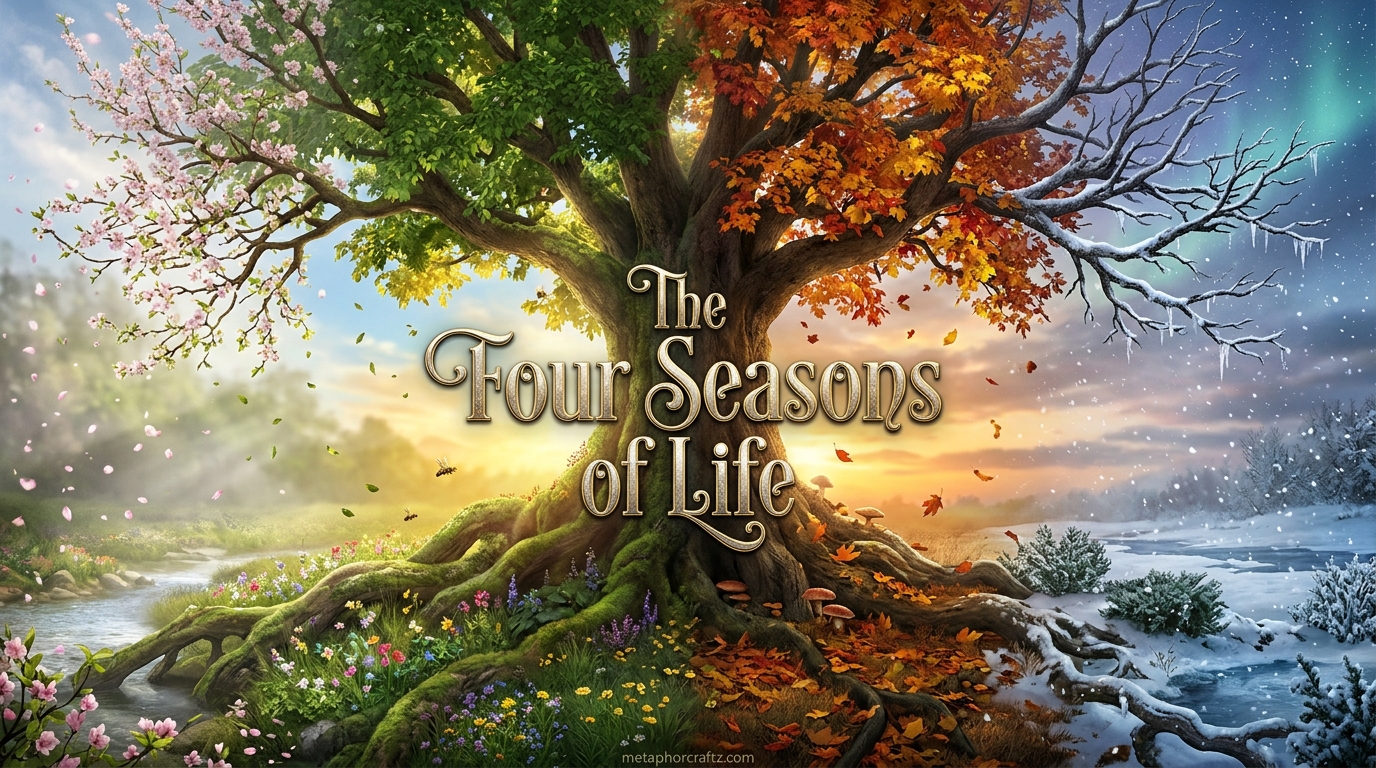
Seasons Metaphor for Life: Powerful Examples and Their Meanings
Life is a lot like the changing seasons. Some days feel like spring, full of hope and new beginnings.
Other days feel like summer, when life is bright and everything seems to go well. Then comes autumn, a time to let go, and winter, when we may need rest, patience, and strength.
A seasons metaphor for life compares the different stages of human life to the four seasons of the year.
Spring often stands for growth, summer for joy and success, autumn for change, and winter for hardship or rest. These comparisons help us explain feelings and life experiences in simple, memorable ways.
People search for this metaphor when writing poems, school essays, speeches, social media captions, journal entries, or messages about personal growth.
They may also want to understand quotes about life’s seasons or find the right words to describe a difficult time.
But what does each season really mean? Is winter always a symbol of sadness? Does spring always mean a fresh start? The answer depends on the person, the situation, and the message being shared.
This guide, updated for 2026, explains the meaning of life’s seasons and gives you more than 60 examples with simple explanations, sample sentences, and tips for using them.
You will learn how to choose a metaphor that fits your message, avoid common mistakes, and use seasonal language naturally in everyday life.
Definition & Meaning

A seasons metaphor for life is a way to describe human experiences by comparing them to the seasons of the year. Spring can represent new beginnings, summer can represent happiness and growth, autumn can represent change, and winter can represent rest or struggle. These meanings are flexible, not fixed rules.
What does the seasons metaphor mean?
In simple words, the metaphor says that life changes just as the seasons change. We do not feel the same way or live in the same situation forever.
Think about a tree
People also go through times of growth, success, loss, and rest. A person who starts a new job may feel they are in spring. Someone who is healing after a painful breakup may feel they are in winter.
The metaphor reminds us that every stage has its own purpose, even when we cannot see it right away.
The four seasons and their meanings
| Season | Common life meaning | Feelings it may describe | Example |
|---|---|---|---|
| Spring | New beginnings | Hope, excitement, courage | “My life is entering a new spring.” |
| Summer | Growth and joy | Confidence, love, success | “I am enjoying the summer of my life.” |
| Autumn (Fall) | Change and letting go | Wisdom, reflection, acceptance | “I am learning to let go in this autumn season.” |
| Winter | Rest and hardship | Patience, loneliness, healing | “This winter of my life is teaching me strength.” |
These are common symbolic meanings, not strict definitions. Winter can bring peace, and summer can bring stress. A season’s meaning depends on the story you want to tell.
Why are seasons a powerful metaphor for life?
Seasons make an abstract idea easy to understand. Everyone knows that nature changes over time, so the comparison helps people describe changes in their own lives.
The metaphor also offers comfort. A hard period may feel endless, but the image of changing seasons reminds us that life can change again.
Still, it does not mean that every problem will disappear on its own. Sometimes a new season begins because we make a choice, ask for help, or take a small step forward.
Why We Use a Seasons Metaphor for Life
We use a seasons metaphor for life to explain change, growth, happiness, loss, and hope in a clear and memorable way. It turns complex feelings into familiar pictures from nature. People use it in everyday speech, creative writing, schoolwork, speeches, personal messages, and social media posts to help others understand what a life experience feels like.
1. To describe personal growth
People change as they learn from mistakes, relationships, work, and life challenges. Calling a period of growth “spring” or “summer” gives that change a clear image.
Example: “After years of doubt, I finally feel like spring has arrived in my life.”
2. To explain difficult times
Winter is often used to describe a period of sadness, uncertainty, or struggle. It can help someone express pain without sharing every personal detail.
Example: “I am going through a long winter, but I am taking things one day at a time.”
3. To express hope
Spring represents the chance to begin again. It is useful when someone starts a new job, returns to school, heals from a loss, or tries something new.
Example: “Every ending leaves room for a new spring.”
4. To make writing more vivid
Metaphors help readers picture an idea rather than simply read a statement.
Plain sentence: “My life changed after graduation.”
Metaphorical sentence: “Graduation opened the door to a new spring in my life.”
5. To communicate wisdom
Autumn can represent the wisdom that comes from experience. It may describe a time when someone understands what matters most and lets go of things they no longer need.
Example: “In the autumn of my life, I care more about peace than approval.”
6. To connect with an audience
Seasonal language works well in graduation speeches, wedding toasts, memorial messages, motivational talks, and personal essays because most people understand the cycle of the seasons.
The key is to choose a comparison that fits the moment. A hopeful spring metaphor may suit a graduation speech, while a gentle winter metaphor may better express grief or the need for rest.
Main Section: 64 Seasons Metaphor for Life Examples

Here are 64 examples of seasonal metaphors you can use in essays, conversations, poems, speeches, and personal reflections. Each example includes its meaning, a real-life explanation, a sample sentence, and guidance on when to use it.
The examples are original expressions, not quotations attributed to famous writers.
Spring Metaphors: New Beginnings, Hope, and Growth
Spring often symbolizes the start of something new. It can describe fresh goals, healing, learning, love, or a change in direction.
1. Life Is a Spring Garden
Meaning: Life is a place where new things can grow.
Real explanation: Like a garden, life needs care, time, and patience. Your choices help shape what grows.
Sample sentence: “After years of struggle, I am finally planting a spring garden in my life.”
When to use it: Personal growth essays, motivational writing, or fresh-start messages.
When NOT to use it: When you need to describe a sudden crisis without suggesting growth.
Alternatives: A fresh start; a garden of hope; new roots.
Difficulty: Easy. Tone: Neutral.
2. My Life Has Entered Spring
Meaning: A hopeful new phase has begun.
Real explanation: You may feel ready to try again after a hard time.
Sample sentence: “After finding a job I love, my life has entered spring.”
When to use it: New jobs, recovery, or personal milestones.
When NOT to use it: When the situation is still uncertain and the statement feels too confident.
Alternatives: A new chapter; a fresh beginning; a new dawn.
Difficulty: Easy. Tone: Neutral.
3. Hope Is Blooming Again
Meaning: Hope is returning after a difficult period.
Real explanation: Like a flower opening, hope can return slowly after disappointment.
Sample sentence: “After months of worry, hope is blooming again in our family.”
When to use it: Encouragement, recovery stories, or supportive messages.
When NOT to use it: When someone needs you to listen rather than offer reassurance.
Alternatives: Hope is growing; light is returning; faith is renewed.
Difficulty: Easy. Tone: Warm.
4. I Am Planting Seeds for Tomorrow
Meaning: You are taking small steps toward a better future.
Real explanation: Daily habits and careful choices can lead to future results.
Sample sentence: “Every evening I spend studying, I am planting seeds for tomorrow.”
When to use it: Education, career planning, and goal setting.
When NOT to use it: When discussing results that require immediate action.
Alternatives: Building my future; laying the groundwork; investing in tomorrow.
Difficulty: Easy. Tone: Neutral.
5. My Dreams Are Coming Into Bloom
Meaning: Your dreams are beginning to become real.
Real explanation: A plan that once seemed far away is now showing progress.
Sample sentence: “After years of practice, my dreams are coming into bloom.”
When to use it: Achievements, creative work, and personal milestones.
When NOT to use it: When no progress has begun and you want to describe only an idea.
Alternatives: Dreams are taking shape; goals are growing; plans are bearing fruit.
Difficulty: Easy. Tone: Positive.
6. A New Spring Is Dawning
Meaning: A fresh and hopeful period is beginning.
Real explanation: This expression combines spring with dawn to show the start of change.
Sample sentence: “With the new school year, a new spring is dawning for me.”
When to use it: Speeches, stories, and reflective writing.
When NOT to use it: In very plain business writing where direct language is clearer.
Alternatives: A new chapter begins; a fresh season starts; a new day is coming.
Difficulty: Medium. Tone: Poetic.
7. I Am Growing New Roots
Meaning: You are building a stronger foundation.
Real explanation: Starting over often means developing new habits, friendships, or a sense of belonging.
Sample sentence: “In my new town, I am growing new roots and finding my place.”
When to use it: Moving, rebuilding relationships, or making life changes.
When NOT to use it: When you want to stress freedom from all commitments.
Alternatives: Building a foundation; putting down roots; creating stability.
Difficulty: Easy. Tone: Reflective.
8. My Heart Is Thawing
Meaning: You are beginning to feel open and trusting again.
Real explanation: Emotional pain can make people guarded. Healing may help them feel close to others again.
Sample sentence: “After a long period of grief, my heart is slowly thawing.”
When to use it: Healing, friendship, and emotional recovery.
When NOT to use it: When a person needs firm emotional boundaries rather than pressure to open up.
Alternatives: Opening my heart; learning to trust; letting warmth return.
Difficulty: Easy. Tone: Emotional.
9. I Am Stepping Into the Light of Spring
Meaning: You are moving toward hope and a better outlook.
Real explanation: Spring’s light suggests a clearer, more hopeful view of life.
Sample sentence: “With support from my friends, I am stepping into the light of spring.”
When to use it: Recovery stories and encouraging messages.
When NOT to use it: When you want to describe a quiet, uncertain beginning.
Alternatives: Moving toward hope; finding the light; welcoming change.
Difficulty: Medium. Tone: Poetic.
10. My Future Is Full of Budding Possibilities
Meaning: Many opportunities may be ahead.
Real explanation: Buds have not yet become flowers, just as possibilities have not yet become achievements.
Sample sentence: “At eighteen, my future is full of budding possibilities.”
When to use it: Graduation cards, youth essays, and goal setting.
When NOT to use it: When you need to promise a specific result.
Alternatives: New doors are opening; opportunities are growing; a world of possibilities.
Difficulty: Medium. Tone: Positive.
11. I Am Turning Over a New Leaf
Meaning: You are choosing to change your behavior or begin again.
Real explanation: The expression is a common idiom connected to the image of a fresh leaf.
Sample sentence: “I am turning over a new leaf and taking better care of myself.”
When to use it: New habits, apologies, and personal change.
When NOT to use it: When you need to show that change has already been proven through action.
Alternatives: Starting fresh; changing my ways; making a clean start.
Difficulty: Easy. Tone: Neutral.
12. My Life Is Coming Back to Life
Meaning: Energy, joy, or purpose is returning.
Real explanation: Like a plant after winter, a person may begin to feel active and hopeful again.
Sample sentence: “Since I started painting again, my life is coming back to life.”
When to use it: Creative renewal, recovery, and rediscovering interests.
When NOT to use it: In a situation where the phrase could sound insensitive to someone facing serious loss.
Alternatives: Finding joy again; feeling renewed; regaining my spark.
Difficulty: Easy. Tone: Warm.
13. I Am Learning to Blossom Slowly
Meaning: Personal growth is happening at its own pace.
Real explanation: People do not all reach milestones at the same time. Slow progress can still be meaningful.
Sample sentence: “My friends are moving ahead, but I am learning to blossom slowly.”
When to use it: Self-acceptance, education, and personal development.
When NOT to use it: When a deadline requires a direct plan and measurable progress.
Alternatives: Growing at my own pace; taking small steps; developing in time.
Difficulty: Easy. Tone: Gentle.
14. The Seeds of Change Are Growing
Meaning: Early signs of a future change are appearing.
Real explanation: Small actions or new ideas may eventually lead to larger results.
Sample sentence: “Our honest talks planted the seeds of change in our family.”
When to use it: Relationships, community projects, and habit changes.
When NOT to use it: When you need to announce a completed change.
Alternatives: Change is taking root; progress is beginning; the first signs are showing.
Difficulty: Easy. Tone: Neutral.
15. I Am Finding My Spring Again
Meaning: You are recovering a sense of hope or happiness you once had.
Real explanation: A person can return to activities and feelings that make life meaningful after a hard period.
Sample sentence: “I lost myself for a while, but I am finding my spring again.”
When to use it: Reflective writing, healing, and personal stories.
When NOT to use it: When it may suggest that grief should end on a fixed schedule.
Alternatives: Finding myself again; rediscovering joy; returning to hope.
Difficulty: Medium. Tone: Emotional.
16. Every Morning Holds a New Spring
Meaning: Each new day offers a chance to begin again.
Real explanation: The image connects the start of a day with the renewal of spring.
Sample sentence: “I remind myself that every morning holds a new spring.”
When to use it: Journals, inspirational captions, and encouraging notes.
When NOT to use it: When you need to acknowledge a person’s ongoing pain without offering a quick solution.
Alternatives: Every day is a fresh start; tomorrow brings new chances; begin again today.
Difficulty: Medium. Tone: Inspirational.
Summer Metaphors: Joy, Success, Love, and Abundance
Summer can represent a full and happy stage of life. It can also symbolize confidence, strong relationships, achievement, and the freedom to enjoy what you have built.
17. I Am in the Summer of My Life
Meaning: You are experiencing a bright, rewarding stage of life.
Real explanation: This may describe a time of confidence, energy, strong relationships, or meaningful success.
Sample sentence: “With a loving family and work I enjoy, I feel I am in the summer of my life.”
When to use it: Personal reflections and speeches about happiness.
When NOT to use it: When age or life stage makes the comparison confusing without more context.
Alternatives: In a golden season; at a high point; enjoying a bright chapter.
Difficulty: Easy. Tone: Positive.
18. My Life Is in Full Bloom
Meaning: You are thriving or reaching your potential.
Real explanation: A flower in full bloom suggests that growth has become visible.
Sample sentence: “Since opening my own business, my life feels like it is in full bloom.”
When to use it: Achievements, career progress, and personal confidence.
When NOT to use it: When you want to focus on the early stages of a goal.
Alternatives: Thriving; reaching my potential; flourishing.
Difficulty: Easy. Tone: Positive.
19. I Am Reaping the Sunshine
Meaning: You are enjoying the rewards of positive choices.
Real explanation: The expression links sunshine with the benefits of effort and care.
Sample sentence: “After years of saving, I am reaping the sunshine of a more secure life.”
When to use it: Celebrating progress and long-term effort.
When NOT to use it: When success depends heavily on luck or support and the phrase might overstate personal control.
Alternatives: Enjoying the rewards; seeing the results; benefiting from my efforts.
Difficulty: Medium. Tone: Warm.
20. My Happiness Is a Summer Sky
Meaning: Your happiness feels open, bright, and full of possibility.
Real explanation: A clear summer sky creates an image of peace and freedom.
Sample sentence: “When I am with my family, my happiness is a summer sky.”
When to use it: Poetry, love notes, and personal reflections.
When NOT to use it: When you need a precise description of a complex emotional state.
Alternatives: A bright outlook; a heart full of sunshine; a clear horizon.
Difficulty: Medium. Tone: Poetic.
21. I Am Standing Tall in the Summer Sun
Meaning: You feel confident and strong.
Real explanation: The image suggests someone standing openly in warm sunlight without hiding.
Sample sentence: “After finishing my degree, I am standing tall in the summer sun.”
When to use it: Graduation, career milestones, and confidence-building messages.
When NOT to use it: When the person feels vulnerable and needs a gentler image.
Alternatives: Standing with confidence; stepping into my strength; owning my success.
Difficulty: Medium. Tone: Confident.
22. Love Is the Summer of My Heart
Meaning: Love brings warmth and happiness into your life.
Real explanation: Summer becomes an image for the joy and closeness that love can create.
Sample sentence: “Even on hard days, my family’s love is the summer of my heart.”
When to use it: Romantic writing, family messages, and poetry.
When NOT to use it: In formal reports or practical business communication.
Alternatives: Love warms my heart; love is my sunshine; a heart filled with warmth.
Difficulty: Medium. Tone: Romantic.
23. I Am Living Under a Golden Sun
Meaning: Life feels especially rewarding or fortunate.
Real explanation: Golden sunlight suggests a period that feels precious and full of joy.
Sample sentence: “With good health and close friends, I feel I am living under a golden sun.”
When to use it: Gratitude posts and personal essays.
When NOT to use it: When discussing serious hardship that should not be softened.
Alternatives: Enjoying a golden chapter; living in brighter days; counting my blessings.
Difficulty: Medium. Tone: Reflective.
24. My Hard Work Is Bearing Summer Fruit
Meaning: Your effort is producing positive results.
Real explanation: Work done earlier has developed into something you can now enjoy.
Sample sentence: “After months of practice, my hard work is bearing summer fruit.”
When to use it: Education, training, and career achievements.
When NOT to use it: When the work has not yet produced a result.
Alternatives: Reaping the rewards; seeing my effort pay off; enjoying the harvest.
Difficulty: Medium. Tone: Neutral.
25. I Am Dancing Through a Summer Season
Meaning: You are moving through life with joy and freedom.
Real explanation: Dancing suggests energy, while summer suggests warmth and enjoyment.
Sample sentence: “After years of working toward this goal, I am dancing through a summer season.”
When to use it: Celebrations, travel stories, and uplifting captions.
When NOT to use it: When a serious or quiet tone is more suitable.
Alternatives: Enjoying the moment; moving with joy; celebrating life’s good days.
Difficulty: Easy. Tone: Playful.
26. My Confidence Is Shining Like Summer Sunlight
Meaning: Your self-belief has become strong and visible.
Real explanation: Bright sunlight represents confidence that no longer stays hidden.
Sample sentence: “Speaking in front of the class helped my confidence shine like summer sunlight.”
When to use it: Personal development, speeches, and success stories.
When NOT to use it: When you want to describe quiet confidence rather than bold self-belief.
Alternatives: Growing in confidence; shining brightly; believing in myself.
Difficulty: Easy. Tone: Encouraging.
27. I Am Gathering Memories in the Warmth of Summer
Meaning: You are making happy memories during a good period of life.
Real explanation: Warmth suggests comfort, while summer suggests time spent enjoying people and experiences.
Sample sentence: “Our family trip gave us years of memories to gather in the warmth of summer.”
When to use it: Travel writing, family albums, and reflective posts.
When NOT to use it: When you want to focus on loss rather than joyful experiences.
Alternatives: Making golden memories; enjoying precious moments; collecting happy days.
Difficulty: Medium. Tone: Warm.
28. My World Is a Field of Sunflowers
Meaning: Your surroundings feel cheerful, bright, and full of hope.
Real explanation: Sunflowers suggest warmth and a positive outlook.
Sample sentence: “Since joining the new team, my world feels like a field of sunflowers.”
When to use it: Creative writing, friendship messages, and uplifting stories.
When NOT to use it: When describing a mixed or difficult environment that needs a balanced account.
Alternatives: A brighter world; a garden of joy; a place full of light.
Difficulty: Medium. Tone: Poetic.
29. I Am Enjoying the Fruits of My Summer
Meaning: You are benefiting from a successful stage of life.
Real explanation: Summer’s fruit represents the rewards of effort, opportunity, and growth.
Sample sentence: “After years of building my career, I am enjoying the fruits of my summer.”
When to use it: Reflections on achievement and progress.
When NOT to use it: When the rewards are still uncertain or you want to focus on future plans.
Alternatives: Enjoying my success; seeing the benefits; celebrating my progress.
Difficulty: Medium. Tone: Reflective.
30. My Days Are Filled With Summer Light
Meaning: Your everyday life feels hopeful and pleasant.
Real explanation: Summer light gives an image of steady warmth rather than a single moment of happiness.
Sample sentence: “Simple dinners with my family make my days feel filled with summer light.”
When to use it: Journals, poetry, and gratitude captions.
When NOT to use it: When you need to express emotional pain directly.
Alternatives: Living in brighter days; finding joy in the ordinary; feeling surrounded by warmth.
Difficulty: Easy. Tone: Gentle.
31. I Have Reached the Sunny Side of Life
Meaning: You are experiencing a more positive stage after difficulty.
Real explanation: The sunny side suggests a shift toward better conditions or a happier outlook.
Sample sentence: “After changing careers, I feel I have reached the sunny side of life.”
When to use it: Personal stories, casual conversation, and uplifting messages.
When NOT to use it: When it could imply that people who struggle simply need to be more positive.
Alternatives: Things are looking up; brighter days are here; life feels lighter.
Difficulty: Easy. Tone: Informal.
32. I Am Living in the Fullness of Summer
Meaning: You are enjoying a rich and rewarding period.
Real explanation: The fullness of summer suggests that growth and opportunity are at their peak.
Sample sentence: “With meaningful work and time for friends, I am living in the fullness of summer.”
When to use it: Reflective essays, speeches, and poetry.
When NOT to use it: When you want to express a new beginning rather than a mature stage.
Alternatives: In a season of abundance; thriving in the present; enjoying life’s richness.
Difficulty: Medium. Tone: Poetic.
Autumn Metaphors: Change, Wisdom, Gratitude, and Letting Go
Autumn, also called fall in American English, often represents change and reflection. Its falling leaves can remind us that letting go is sometimes part of making room for something new.
33. I Am Entering the Autumn of My Life
Meaning: You are moving into a stage of reflection or maturity.
Real explanation: This phrase often refers to later life, but it can also describe a period of change and deeper understanding.
Sample sentence: “As I enter the autumn of my life, I value time with loved ones more than status.”
When to use it: Personal essays, retirement reflections, and discussions of aging.
When NOT to use it: When the phrase could wrongly suggest that a person’s future is nearly over.
Alternatives: A season of reflection; a mature chapter; a time of wisdom.
Difficulty: Medium. Tone: Reflective.
34. I Am Learning to Let My Leaves Fall
Meaning: You are learning to release things you no longer need.
Real explanation: Trees lose their leaves naturally. People may also need to release old habits, expectations, or relationships.
Sample sentence: “I am learning to let my leaves fall and stop carrying every old disappointment.”
When to use it: Personal growth and emotional reflection.
When NOT to use it: When the situation calls for repairing a relationship rather than ending it.
Alternatives: Letting go; releasing the past; making room for change.
Difficulty: Easy. Tone: Gentle.
35. My Past Is Falling Like Autumn Leaves
Meaning: Old experiences are becoming part of the past.
Real explanation: The image suggests that memories and former stages are slowly moving away from the center of your life.
Sample sentence: “My past is falling like autumn leaves, and I am learning to live in the present.”
When to use it: Memoirs, poems, and reflections on change.
When NOT to use it: When you need to show that a past event still has a strong effect on you.
Alternatives: Leaving the past behind; turning a page; releasing old memories.
Difficulty: Medium. Tone: Poetic.
36. I Am Harvesting the Lessons of Life
Meaning: You are learning from your experiences.
Real explanation: A harvest gathers what has grown. In life, reflection helps us collect lessons from both success and failure.
Sample sentence: “After a difficult year, I am harvesting the lessons of life.”
When to use it: Essays, personal development, and end-of-year reflections.
When NOT to use it: When a person needs support before they are ready to reflect on a painful experience.
Alternatives: Learning from experience; gathering wisdom; taking lessons forward.
Difficulty: Easy. Tone: Reflective.
37. My Wisdom Is Ripening Like Autumn Fruit
Meaning: Your understanding is becoming deeper with time.
Real explanation: Fruit ripens gradually, just as experience can lead to better judgment.
Sample sentence: “My wisdom is ripening like autumn fruit as I learn to make calmer choices.”
When to use it: Poetry, reflective writing, and discussions of maturity.
When NOT to use it: When you need a humble tone and do not want to sound self-congratulatory.
Alternatives: Growing wiser; gaining perspective; maturing with experience.
Difficulty: Medium. Tone: Poetic.
38. I Am Making Peace With Falling Leaves
Meaning: You are accepting change and loss.
Real explanation: Falling leaves become a symbol of things that cannot remain the same forever.
Sample sentence: “I am making peace with falling leaves as my children build lives of their own.”
When to use it: Family changes, retirement, and personal reflections.
When NOT to use it: When acceptance is being used to excuse an injustice that can still be addressed.
Alternatives: Accepting change; finding peace with the past; learning to release.
Difficulty: Medium. Tone: Gentle.
39. The Autumn Wind Is Changing My Direction
Meaning: New circumstances are pushing you toward a different path.
Real explanation: A change in wind can move leaves and branches. In life, new information or events can change our plans.
Sample sentence: “Losing that job became the autumn wind that changed my direction.”
When to use it: Career changes, unexpected events, and personal stories.
When NOT to use it: When you want to emphasize that you chose the change freely.
Alternatives: A new path is opening; circumstances are shifting; life is taking a turn.
Difficulty: Medium. Tone: Reflective.
40. I Am Finding Beauty in the Falling Leaves
Meaning: You are learning to see value in change, even when it brings sadness.
Real explanation: Autumn can be beautiful despite the fact that leaves are falling. A changing life can hold both grief and gratitude.
Sample sentence: “Retirement felt strange at first, but I am finding beauty in the falling leaves.”
When to use it: Aging, transitions, and gratitude writing.
When NOT to use it: When the comparison risks making someone’s real suffering seem unimportant.
Alternatives: Finding beauty in change; seeing good in endings; appreciating this stage.
Difficulty: Medium. Tone: Thoughtful.
41. My Life Is a Golden Autumn
Meaning: You are in a mature stage that feels rich and meaningful.
Real explanation: Golden leaves suggest beauty, wisdom, and appreciation for what life has given you.
Sample sentence: “With close friends and years of memories, my life feels like a golden autumn.”
When to use it: Retirement speeches, family stories, and reflective essays.
When NOT to use it: When describing a very early stage of growth.
Alternatives: A golden chapter; a season of wisdom; a rich stage of life.
Difficulty: Easy. Tone: Warm.
42. I Am Gathering the Fruits of Experience
Meaning: You are using what you have learned over time.
Real explanation: Experiences can provide skills, insight, and better judgment that become useful later.
Sample sentence: “As a new manager, I am gathering the fruits of experience from every challenge.”
When to use it: Work, mentoring, and personal development.
When NOT to use it: When you need to describe a new skill that has not yet developed.
Alternatives: Drawing on experience; using hard-earned wisdom; learning from the past.
Difficulty: Easy. Tone: Professional.
43. My Old Habits Are Falling Away
Meaning: You are leaving behind behaviors that no longer serve you.
Real explanation: Like leaves dropping from a tree, old habits can lose their place in your life.
Sample sentence: “With practice and support, my old habits are falling away.”
When to use it: Lifestyle changes, self-improvement, and recovery stories.
When NOT to use it: When you want to claim a lasting change before it has become a pattern.
Alternatives: Breaking old patterns; changing my ways; leaving unhealthy habits behind.
Difficulty: Easy. Tone: Neutral.
44. I Am Learning the Art of Release
Meaning: You are learning to stop holding on to what you cannot control.
Real explanation: Autumn can suggest the wisdom of allowing some things to end naturally.
Sample sentence: “This year, I am learning the art of release instead of trying to control every outcome.”
When to use it: Journaling, personal reflection, and emotional growth.
When NOT to use it: When practical action is still needed to solve the problem.
Alternatives: Letting go with grace; accepting what I cannot change; loosening my grip.
Difficulty: Medium. Tone: Reflective.
45. My Life Is Changing Color
Meaning: Your outlook, priorities, or circumstances are changing.
Real explanation: Autumn leaves change color, offering a simple image for a person whose life is taking a new shape.
Sample sentence: “Since becoming a parent, my life is changing color in ways I never expected.”
When to use it: Major milestones, identity changes, and personal essays.
When NOT to use it: When the change is minor and the metaphor makes it sound too dramatic.
Alternatives: My priorities are shifting; life is taking a new shape; I see things differently.
Difficulty: Easy. Tone: Neutral.
46. I Am Walking Through a Forest of Memories
Meaning: You are reflecting on many experiences from your past.
Real explanation: A forest gives the feeling of moving among many connected memories, some clear and some hard to reach.
Sample sentence: “Looking through old photographs, I felt I was walking through a forest of memories.”
When to use it: Memoirs, family histories, and nostalgic writing.
When NOT to use it: When you want to focus on one clear event rather than many memories.
Alternatives: Revisiting the past; walking down memory lane; exploring old memories.
Difficulty: Medium. Tone: Nostalgic.
47. Autumn Is Teaching Me What Matters
Meaning: Change is helping you see your true priorities.
Real explanation: A changing season can encourage reflection on relationships, time, and the things worth keeping.
Sample sentence: “After a year of change, autumn is teaching me what matters most.”
When to use it: Reflective essays, life updates, and speeches.
When NOT to use it: When you want to avoid suggesting that every difficult event has a hidden lesson.
Alternatives: Discovering my priorities; learning what counts; seeing what is important.
Difficulty: Easy. Tone: Thoughtful.
48. I Am Preparing for a Quieter Season
Meaning: You are choosing a calmer pace or preparing for a transition.
Real explanation: Autumn often comes before winter, so it can symbolize preparing for rest or change.
Sample sentence: “After years of busy work, I am preparing for a quieter season of life.”
When to use it: Retirement, taking a break, and setting new boundaries.
When NOT to use it: When you need to communicate an immediate and urgent change.
Alternatives: Slowing down; preparing for a new phase; choosing a calmer pace.
Difficulty: Easy. Tone: Calm.
Winter Metaphors: Hardship, Rest, Patience, and Healing
Winter is often used to describe difficult or quiet periods. It can stand for grief, loneliness, uncertainty, or a time when progress is hard to see. It can also mean rest, reflection, and the chance to protect your energy.
49. I Am in the Winter of My Life
Meaning: You are going through a cold, quiet, or challenging stage.
Real explanation: Winter may describe emotional struggle, a major loss, or a time when life feels less active.
Sample sentence: “Since moving away from my friends, I have felt I am in the winter of my life.”
When to use it: Personal writing and reflective conversations.
When NOT to use it: When it may make a temporary problem sound permanent.
Alternatives: A difficult season; a quiet chapter; a period of struggle.
Difficulty: Easy. Tone: Somber.
50. My Heart Is a Winter Garden
Meaning: Your emotions feel quiet, guarded, or unable to grow freely right now.
Real explanation: A winter garden may look empty, but it can still hold life beneath the surface.
Sample sentence: “After the breakup, my heart felt like a winter garden waiting for warmth.”
When to use it: Poetry, emotional writing, and stories about healing.
When NOT to use it: When you need to explain a practical issue in direct language.
Alternatives: A guarded heart; an emotional winter; a quiet place inside me.
Difficulty: Medium. Tone: Poetic.
51. I Am Weathering a Winter Storm
Meaning: You are trying to endure a difficult period.
Real explanation: A winter storm can represent a crisis, family conflict, financial stress, or another hard challenge.
Sample sentence: “We are weathering a winter storm while we work through our family’s problems.”
When to use it: Difficult life events and messages of support.
When NOT to use it: When a person needs immediate practical help rather than a figurative description.
Alternatives: Getting through a hard time; facing the storm; enduring a rough patch.
Difficulty: Easy. Tone: Serious.
52. My Progress Is Hidden Beneath the Snow
Meaning: You may be growing even when others cannot see the results.
Real explanation: Snow covers the ground, making it hard to see what is beneath it. Quiet effort can work the same way.
Sample sentence: “I have not reached my goal yet, but my progress is hidden beneath the snow.”
When to use it: Studying, training, recovery, and long-term goals.
When NOT to use it: When you need to measure progress honestly instead of assuming it is happening.
Alternatives: Growing quietly; working behind the scenes; laying unseen foundations.
Difficulty: Medium. Tone: Encouraging.
53. I Am Learning to Rest in Winter
Meaning: You are accepting the need to pause and recover.
Real explanation: Winter can be a symbol of rest rather than failure. A pause can help you regain energy.
Sample sentence: “After months of overwork, I am learning to rest in winter without feeling guilty.”
When to use it: Burnout discussions, self-care writing, and personal reflections.
When NOT to use it: When a task requires immediate attention and cannot safely wait.
Alternatives: Taking time to recover; slowing down; allowing myself to rest.
Difficulty: Easy. Tone: Gentle.
54. The Cold Season Is Testing My Roots
Meaning: Difficult times are testing the strength of your beliefs, relationships, or support system.
Real explanation: Strong roots help a tree remain grounded in cold weather. Challenges can reveal which foundations are dependable.
Sample sentence: “Losing my job has made me question my plans, but the cold season is testing my roots.”
When to use it: Resilience, faith, and difficult transitions.
When NOT to use it: When the metaphor could make a person feel that suffering is a test they must pass.
Alternatives: Testing my strength; challenging my foundations; finding out what holds firm.
Difficulty: Medium. Tone: Serious.
55. I Am Keeping a Small Flame Alive
Meaning: You are protecting a little hope during a hard time.
Real explanation: A flame offers warmth in the cold. It can stand for a belief, dream, or reason to keep going.
Sample sentence: “Even when I feel lost, I am keeping a small flame of hope alive.”
When to use it: Encouragement, recovery, and personal essays.
When NOT to use it: When someone needs direct reassurance or professional support rather than a metaphor.
Alternatives: Holding on to hope; protecting my spark; keeping faith alive.
Difficulty: Easy. Tone: Hopeful.
56. My Life Is Paused Beneath the Snow
Meaning: Your life feels still or slow right now.
Real explanation: Snow can cover a landscape and make it seem as if everything has stopped. This metaphor describes a period of waiting.
Sample sentence: “While I recover from the injury, my life feels paused beneath the snow.”
When to use it: Waiting periods, recovery, and reflective writing.
When NOT to use it: When you want to stress active progress or rapid change.
Alternatives: Life is on hold; moving through a quiet period; waiting for things to shift.
Difficulty: Easy. Tone: Somber.
57. I Am Building Strength in the Cold
Meaning: You are developing resilience during a difficult period.
Real explanation: Cold weather creates a picture of discomfort and effort. The metaphor highlights the strength built while facing challenges.
Sample sentence: “Living on my own has been hard, but I am building strength in the cold.”
When to use it: Personal development and stories of perseverance.
When NOT to use it: When the wording might suggest that people must endure harmful conditions alone.
Alternatives: Growing stronger through hardship; developing resilience; finding strength in difficulty.
Difficulty: Easy. Tone: Encouraging.
58. Winter Has Made Me Listen to Myself
Meaning: A quiet or difficult period has given you space to reflect.
Real explanation: When life slows down, you may notice feelings, needs, or goals that were easy to ignore before.
Sample sentence: “The months I spent alone taught me to listen to myself.”
When to use it: Journaling, personal essays, and stories about self-discovery.
When NOT to use it: When isolation is harming you and you need connection or support.
Alternatives: Learning through stillness; hearing my inner voice; finding time to reflect.
Difficulty: Easy. Tone: Reflective.
59. I Am Waiting for the Thaw
Meaning: You are waiting for a difficult situation to begin improving.
Real explanation: A thaw follows freezing weather. The image suggests that a change may make life feel easier again.
Sample sentence: “The job search has been slow, but I am waiting for the thaw.”
When to use it: Uncertain periods, career challenges, and relationship healing.
When NOT to use it: When you can take useful action now instead of only waiting.
Alternatives: Waiting for a change; hoping for better days; looking for a way forward.
Difficulty: Medium. Tone: Hopeful.
60. My Quiet Season Is Not My Final Season
Meaning: A slow or difficult stage does not define your whole life.
Real explanation: Winter is one part of the year, not the entire year. The phrase encourages patience without promising a particular outcome.
Sample sentence: “I have not found the right path yet, but my quiet season is not my final season.”
When to use it: Motivational captions, speeches, and personal reflections.
When NOT to use it: When someone needs their current pain acknowledged before receiving encouragement.
Alternatives: This chapter is not the whole story; change is still possible; my story is still unfolding.
Difficulty: Easy. Tone: Inspirational.
61. I Am Protecting What Still Grows
Meaning: You are caring for the parts of your life that remain strong during hardship.
Real explanation: Even in winter, some life continues beneath the surface. You can protect your health, relationships, and values during a hard period.
Sample sentence: “While my career is uncertain, I am protecting what still grows: my health and my family bonds.”
When to use it: Difficult transitions and discussions of personal priorities.
When NOT to use it: When urgent changes are needed to prevent further harm.
Alternatives: Caring for what matters; protecting my foundations; nurturing what remains.
Difficulty: Medium. Tone: Thoughtful.
62. The Snow Is Teaching Me Patience
Meaning: A slow or difficult time is helping you practice patience.
Real explanation: Snow may delay plans and change routines. In life, delays can teach us to adjust and wait without giving up.
Sample sentence: “My recovery is taking longer than I hoped, and the snow is teaching me patience.”
When to use it: Healing, long-term goals, and reflective writing.
When NOT to use it: When a delay is preventable and needs action rather than acceptance.
Alternatives: Learning to wait; practicing patience; accepting a slower pace.
Difficulty: Easy. Tone: Reflective.
63. I Am Finding Warmth in a Cold World
Meaning: You are discovering comfort and kindness during a hard period.
Real explanation: Warmth may come from friends, family, community, or small acts of care when life feels difficult.
Sample sentence: “When I felt alone in a new city, I found warmth in a neighbor’s kindness.”
When to use it: Stories of friendship, community, and support.
When NOT to use it: When the phrase could distract from a real need for safety or practical assistance.
Alternatives: Finding kindness in hard times; discovering comfort; feeling supported.
Difficulty: Easy. Tone: Warm.
64. Beneath My Winter, Spring Is Possible
Meaning: Hope and change may still be possible during hardship.
Real explanation: The metaphor suggests that a difficult stage does not rule out future growth. It expresses possibility rather than certainty.
Sample sentence: “I cannot see the next step yet, but beneath my winter, spring is possible.”
When to use it: Encouragement, reflective essays, and hopeful writing.
When NOT to use it: When someone needs you to acknowledge a loss without suggesting that it must lead to a better outcome.
Alternatives: Hope remains; a new beginning may come; this difficult time may change.
Difficulty: Medium. Tone: Hopeful.
Real-Life Conversations Using Seasons Metaphors
Seasonal metaphors sound most natural when they fit what someone is feeling. Here are five everyday conversations that show how people might use them.
Conversation 1: Two Friends Talking About a Fresh Start
Mia: You seem happier lately. Did something change?
Emma: I finally left a job that made me miserable.
Mia: That must feel like a big relief.
Emma: It does. I feel like my life has entered spring again.
Mia: I love that. What are you planning to do next?
Emma: Take a little time to rest, then look for work that suits me better.
Why it works: “Entered spring again” expresses hope and a fresh beginning without explaining every detail.
Conversation 2: A Family Member Going Through a Hard Time
Alex: You have been quiet lately. Are you okay?
Jordan: I am dealing with a lot at work and at home.
Alex: I am sorry. Do you want to talk about it?
Jordan: Maybe later. Right now, I feel like I am in the winter of my life.
Alex: I understand. You do not have to figure everything out today. I am here if you need me.
Jordan: Thanks. That means a lot.
Why it works: The winter metaphor communicates hardship, while the response offers support without forcing a positive outlook.
Conversation 3: A Student Discussing Exams
Teacher: How is your exam preparation going?
Student: Slowly. I study every day, but I still do not feel ready.
Teacher: Have you noticed any improvement?
Student: Yes, actually. I understand topics that confused me last month.
Teacher: Then your progress may be growing beneath the snow. Keep practicing and check your results as you go.
Student: That makes me feel better. I will keep working.
Why it works: The metaphor describes progress that is difficult to see. It also encourages the student to keep checking actual results.
Conversation 4: A Coworker Starting a New Career
Sam: How is the new position treating you?
Taylor: It is challenging, but I am learning so much.
Sam: Do you miss your old job?
Taylor: Sometimes. But I think the autumn wind is changing my direction.
Sam: That sounds like a good thing.
Taylor: I hope so. I am trying to stay open to what comes next.
Why it works: The autumn wind represents a change in direction. It fits a conversation about uncertainty and career growth.
Conversation 5: A Social Media Caption About Personal Growth
Nina: I saw your latest post. “My quiet season is not my final season.” What inspired that?
Leah: I have been working on myself instead of sharing everything online.
Nina: That is a good reminder.
Leah: I am learning that not every stage has to look exciting from the outside.
Nina: True. Sometimes the biggest changes happen quietly.
Why it works: The winter-inspired expression shows patience and private growth. It works well as a short caption because the meaning is easy to understand.
Everyday Usage: How to Use Seasons Metaphors Naturally
Seasons metaphors appear in many forms of communication. The best expression depends on your audience, purpose, and tone.
1. In everyday conversation
People use seasonal language to explain changes in their lives without giving a long explanation.
Examples:
- “I am going through a rough winter right now.”
- “Things are finally looking like spring again.”
- “I think I am entering a new season of life.”
Tip: Keep the wording simple. You do not need a long poetic sentence for a casual conversation.
2. In essays and school assignments
Students can use seasons to explain personal development, change, or the passage of time.
Example:
“My life has passed through many seasons. Spring brought new opportunities, summer brought confidence, autumn taught me to let go, and winter showed me the value of patience.”
When writing a school essay, explain the metaphor after using it. This shows that you understand both the literal season and its symbolic meaning.
3. In books and short stories
Writers often use changing seasons to set a mood or show how a character changes.
Example:
“As autumn leaves covered the path, Daniel began to accept that his childhood was ending.”
Here, autumn reflects the character’s transition into a new stage of life.
A useful writing technique is to connect the season to something the character does. Instead of saying only that the character feels sad, show how the cold air, bare trees, or shorter days match the character’s feelings.
4. In movies and screenwriting
A season can help viewers understand a character’s journey.
For example, a film may begin in spring when a character starts a new relationship. The story may move through summer as love grows, autumn as problems appear, and winter as the relationship faces a serious test.
This pattern can help show change over time. However, a film does not have to follow this order. A bright summer scene can also reveal loneliness, while a winter scene can show comfort and love.
5. In poetry
Poetry often uses seasons to express feelings that are hard to explain directly.
Example:
“Winter rests upon my heart,
Yet spring still waits beneath the ground.”
The lines suggest sadness alongside the possibility of hope.
For stronger poetry, use sensory details such as cold wind, warm sunlight, falling leaves, or the smell of fresh rain. These details help readers picture the emotion.
6. In emails
Seasonal metaphors can work in personal or creative emails, especially when discussing a change or expressing encouragement.
Example:
“After a challenging few months, I am looking forward to a new spring in my career.”
For a formal work email, keep the metaphor brief. If the purpose is to share a schedule, report, or decision, direct language is usually better.
7. In text messages
Short metaphors can express feelings quickly.
Examples:
- “Feels like spring is finally here!”
- “I am in a quiet winter season. Just taking time for myself.”
- “Ready to turn over a new leaf.”
Text messages are usually informal, so natural expressions work better than long, complicated metaphors.
8. On Instagram
Seasonal metaphors make effective captions for personal milestones, nature photos, travel, and life updates.
Caption examples:
- “Growing at my own pace. 🌱”
- “A golden season of gratitude. 🍂”
- “Even winter has something to teach us. ❄️”
- “Making room for a new spring. 🌷”
Choose a caption that matches the image. A picture of a new home might suit a spring metaphor, while an autumn landscape might fit a reflection on change.
9. On Facebook
Facebook posts often share family memories, life updates, and personal reflections.
Example:
“Life has taught me that every season has something to offer. I am learning to appreciate the sunny days, accept the falling leaves, and remain patient through winter.”
This style works well for a longer, thoughtful post. Keep the message personal rather than making broad claims about what everyone should feel.
10. On X
Short seasonal metaphors can make a clear point in a brief post.
Examples:
- “Not every season is for blooming. Some are for growing roots.”
- “A quiet season is still part of your story.”
- “Let the old leaves fall. Make room for change.”
The best short posts use one strong image and one clear idea. Too many metaphors in a single post can make the message harder to follow.
11. On LinkedIn
Professional writing can use seasonal metaphors to discuss career changes, learning, leadership, or business growth.
Example:
“After several years in one role, I am entering a new season of professional growth. I am excited to build new skills, learn from my colleagues, and take on fresh challenges.”
Use seasonal language sparingly on LinkedIn. Pair the metaphor with specific goals or actions so the message remains useful and professional.
12. In speeches and presentations
Seasonal metaphors help speakers organize a story around a beginning, a period of growth, a time of change, and a new direction.
Example:
“Our journey began in spring, when we had an idea but few resources. Summer brought growth, autumn taught us to adapt, and winter tested our determination. Today, we can see how each stage helped shape our team.”
This structure works for graduation speeches, retirement events, team celebrations, and personal talks.
13. In journal entries
A journal is a good place to explore which season best describes your current life.
Example:
“I feel as if I am in autumn. I am grateful for what I have learned, but I am also ready to release habits that no longer help me.”
You can ask yourself three questions:
- What feels like it is growing in my life?
- What do I need to let go of?
- Where might I need rest, patience, or support?
The answers can help you understand your feelings without forcing your experience into a fixed seasonal pattern.
How to Choose the Right Seasons Metaphor
The easiest way to choose a metaphor is to begin with the message you want to share.
| Your message | Best seasonal image | Example |
|---|---|---|
| I am starting over | Spring | “A new spring is dawning.” |
| I am happy and thriving | Summer | “My life is in full bloom.” |
| I am changing my priorities | Autumn | “I am letting my leaves fall.” |
| I am going through hardship | Winter | “I am weathering a winter storm.” |
| I need time to recover | Winter | “I am learning to rest in winter.” |
| I am learning from the past | Autumn | “I am harvesting life’s lessons.” |
| I am making progress slowly | Spring | “I am learning to blossom slowly.” |
| I need hope during uncertainty | Winter moving toward spring | “Beneath my winter, spring is possible.” |
Remember that these are creative choices, not strict rules. You can use spring to describe a new challenge, autumn to describe beauty, or winter to describe a peaceful retreat.
The right metaphor is the one that communicates your experience honestly.
Common Mistakes to Avoid
1. Assuming every winter must end quickly
A winter metaphor can offer hope, but it should not imply that grief, illness, or hardship has a simple deadline.
Better approach: “I hope things will change, and I am taking things one day at a time.”
2. Using too many metaphors at once
A sentence such as “My winter garden is blooming under a golden sun while autumn winds plant new roots” mixes too many images.
Better approach: Choose one main image and develop it clearly.
3. Treating seasonal meanings as universal
Not everyone associates winter with sadness or summer with happiness. Culture, climate, memory, and personal experience affect the meaning.
Better approach: Give enough context for readers to understand what the season means to you.
4. Using poetic language when plain words are needed
Metaphors can make writing memorable, but they should not hide the message.
Instead of writing, “My autumn wind is moving through a winter field,” say, “I am adjusting to a difficult career change.”
5. Confusing a metaphor with a simile
A metaphor says one thing is another thing in a figurative sense. A simile compares things using words such as like or as.
- Metaphor: “My life is a winter garden.”
- Simile: “My life is like a winter garden.”
Both can be effective, but they use different forms of comparison.
FAQs:
What is the seasons metaphor for life?
The seasons metaphor for life compares human experiences to the four seasons. Spring often represents new beginnings, summer represents growth or happiness, autumn represents change and reflection, and winter represents hardship or rest. The metaphor shows how life moves through different stages.
What do the four seasons symbolize in human life?
Spring often symbolizes hope and renewal. Summer can symbolize joy and success. Autumn often represents maturity and letting go, while winter can represent rest, grief, patience, or hardship. These meanings can change depending on the writer’s message.
What is a good metaphor for life changes?
“A new season of life” is a simple and flexible metaphor for change. You can also say, “I am turning over a new leaf” when changing your behavior or “The autumn wind is changing my direction” when circumstances lead you down a new path.
What season represents hope?
Spring is commonly used to represent hope because it follows winter and brings new growth. Expressions such as “hope is blooming again” and “a new spring is dawning” suggest that better possibilities may be ahead.
What season represents sadness?
Winter is often used to represent sadness, grief, loneliness, or hardship. However, sadness does not always need to be described as winter. Autumn can express loss and reflection, while spring can describe the slow process of healing.
What does the winter of life mean?
The winter of life describes a quiet, difficult, or less active stage of a person’s life. It may refer to hardship, emotional struggle, or later life. Its exact meaning depends on the context.
What does the autumn of life mean?
The autumn of life often refers to maturity, aging, wisdom, and reflection. It can describe a stage when people value experience, appreciate what they have, and reconsider their priorities.
How can I describe life using all four seasons?
You can describe life as a journey through changing seasons. Spring brings new beginnings, summer offers opportunities for growth, autumn teaches the value of change, and winter creates space for patience and rest. This is a creative framework, not a rule that every life must follow.
What is a short seasons metaphor for life?
Here are five short options:
- “Life moves in seasons.”
- “Every season teaches something.”
- “Not every season is for blooming.”
- “Even winter has a purpose.”
- “A new season brings new possibilities.”
Can I use seasons metaphors in a school essay?
Yes. Seasons metaphors are useful in personal narratives, descriptive writing, poetry, and essays about change or growth. Explain what each season represents so readers can understand how the comparison supports your main point.
Is “life is like the seasons” a metaphor or a simile?
“Life is like the seasons” is a simile because it uses the word like to compare life with the seasons. “Life is a series of seasons” is a metaphor because it makes the comparison directly.
Conclusion:
Life does not stay the same. There are times when everything feels fresh and full of hope, times when we enjoy the rewards of our efforts, times when we must let go, and times when all we can do is rest and keep going.
That is why the seasons metaphor for life is so meaningful. It gives us simple words for complex experiences and helps us describe changes that may otherwise be difficult to explain.
You do not have to be in spring to make progress. You do not have to be in summer to have a meaningful life. Autumn can bring wisdom, and winter can provide space to reflect, heal, or seek support.
Choose the metaphor that fits your experience. Use it in a poem, an essay, a speech, or a message to someone you care about. Most of all, remember that one season does not tell the whole story of a life.
Discover more post:
| https://metaphorcraftz.com/metaphor-for-huge-step-forward/ |
| https://metaphorcraftz.com/metaphor-for-being-hungry/ |
| https://metaphorcraftz.com/metaphor-for-sandy-beach/ |

Juliet is a passionate English language writer and literary content creator with over 5 years of experience in writing about metaphors, figurative language, literary devices, English expressions, and creative writing. As the author behind MetaphorCraftz, she is dedicated to making complex literary concepts simple, clear, and enjoyable for readers of all levels.
Related Post

Metaphor for Corona: Creative and Easy Examples
If by “corona” you mean COVID-19 or the coronavirus, a metaphor compares the virus or…
One thought on “Seasons Metaphor for Life: Powerful Examples and Their Meanings”