
Metaphors for Calming Down: Creative Ways to Describe Peace
MetaphorCraftz.com >> Uncategorized>> Metaphors for Calming Down: Creative Ways to Describe Peace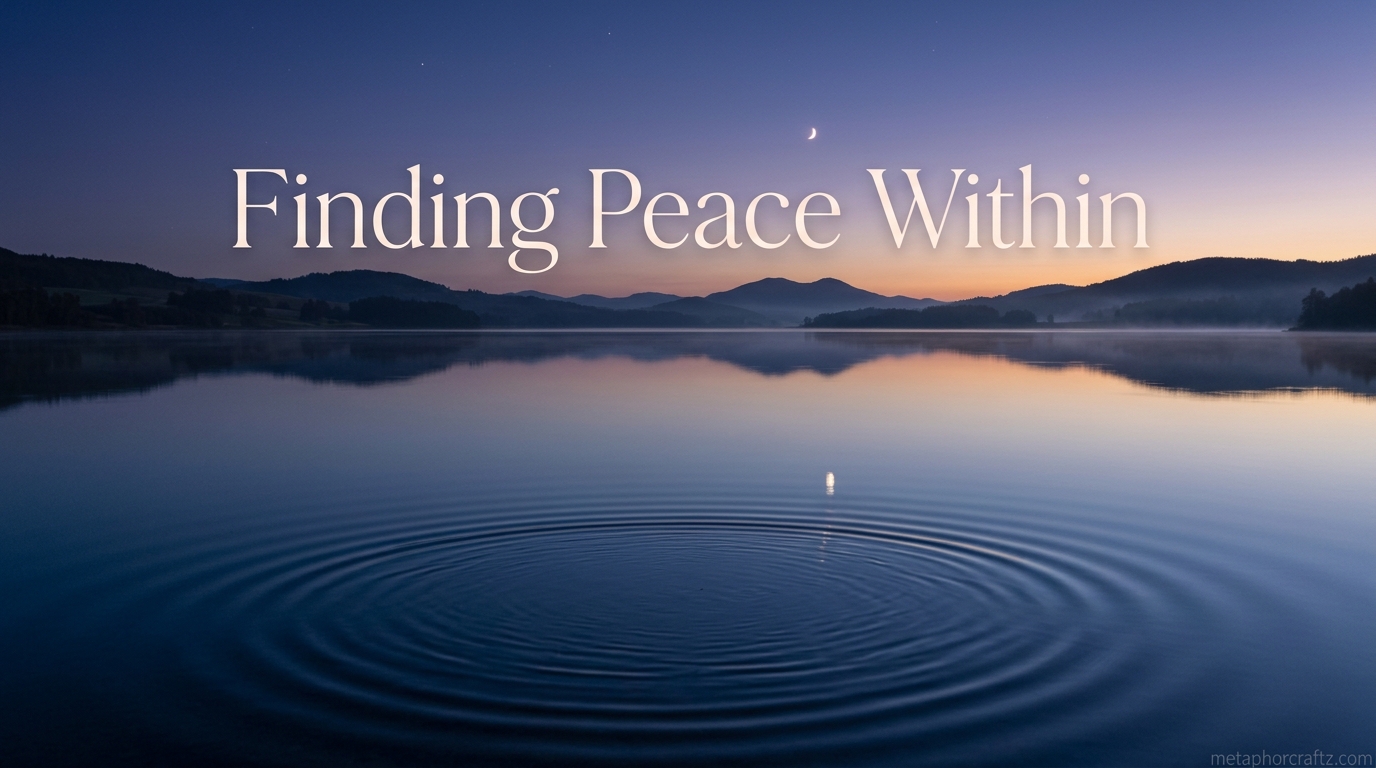
Metaphors for Calming Down: Creative Ways to Describe Peace
Sometimes, finding the right words to describe a peaceful mind can be difficult. You may feel stressed, angry, nervous, or overwhelmed, but you want to explain how those feelings slowly disappear.
That’s where a metaphor for calming down can help.
A metaphor compares the feeling of becoming calm to something familiar, such as a quiet lake, a gentle breeze, or a storm that has finally passed.
These creative expressions make it easier to describe emotions in a simple yet powerful way.
People use calming metaphors in everyday conversations, school assignments, stories, poems, books, and social media captions.
They can also help writers create emotional scenes and make their words more interesting.
For example, saying “The storm inside me has passed” means that anger or stress is fading and peace is returning.
In this updated 2026 guide, you’ll discover more than 60 creative metaphors for calming down, along with their simple meanings, explanations, and example sentences.
You’ll also learn how to use these expressions naturally in conversations, writing, and everyday situations.
Definition & Meaning

A metaphor for calming down is a creative expression that compares a person becoming peaceful to something familiar, such as a quiet lake, a soft breeze, or a slow-burning fire. It helps readers picture the change from stress, anger, or fear to a relaxed state of mind.
People use these metaphors to describe feelings that are sometimes hard to explain with simple words. Instead of saying, “I am not angry anymore,” someone might say, “The storm inside me has passed.”
This kind of language makes everyday conversations more colorful and emotional. It also helps writers create stronger scenes in stories, poems, school assignments, and social media posts.
Quick Explanation
A metaphor for calming down compares a peaceful mind or a relaxed person to something calm, still, gentle, or quiet.
For example:
- A quiet lake: A person has stopped worrying.
- A passing storm: Anger or stress has finally ended.
- A sleeping volcano: Strong emotions have become quiet.
- A gentle breeze: A person feels relaxed and comfortable.
Summary Table
| Term | Meaning | Example |
|---|---|---|
| Calming down | Becoming peaceful | My mind is settling. |
| Inner storm | Strong emotions | The storm inside me is fading. |
| Quiet lake | A peaceful mind | My mind is a quiet lake. |
| Gentle breeze | A relaxed feeling | Peace moved through me like a breeze. |
| Cooling fire | Reduced anger | The fire inside me is cooling. |
Why We Use Metaphors for Calming Down
Metaphors for calming down help people describe peace, patience, and emotional control in a clear and interesting way. They turn feelings into pictures that readers can easily understand. People use them in daily conversations, creative writing, schoolwork, professional messages, and social media.
Here are some common reasons people use these expressions.
1. To Express Feelings
Sometimes, saying “I feel better” does not fully explain how someone feels. A metaphor can show a deeper change.
Example: “The storm in my heart has finally passed.”
This suggests that the person has moved beyond a difficult emotional moment.
2. To Make Everyday Conversations Interesting
Metaphors make ordinary speech more natural and memorable.
Example: “Take a breath. Let the dust settle.”
This means someone should wait until a stressful situation becomes easier.
3. To Improve Creative Writing
Writers use metaphors to show emotions without explaining every detail.
Example: “Her mind became a peaceful garden after a long day.”
This creates a clear picture of relaxation.
4. To Help Students Understand Language
Students use metaphors in English assignments, essays, poems, and classroom activities.
Example: “His anger melted like ice under the sun.”
The sentence compares a change in emotion to melting ice.
5. To Communicate Calmness on Social Media
People often use short metaphors in captions, quotes, and posts.
Example: “Let your worries float away like clouds.”
It gives a peaceful message in a simple way.
6. To Communicate Professionally
Metaphors can make difficult conversations softer when used carefully.
Example: “Let’s allow the dust to settle before making a final decision.”
This encourages people to avoid rushed decisions.
Main Section: 60+ Metaphors for Calming Down

The following examples describe different ways to become calm, release anger, reduce stress, and find inner peace. Some are familiar expressions, while others are original creative comparisons that you can use in conversations, stories, poems, and everyday writing.
1. The Storm Has Passed
Meaning: The difficult or emotional moment is over.
Real explanation: A storm represents anger, fear, or stress. When the storm passes, peace returns.
Sample sentence: After our argument, the storm had finally passed, and we could talk peacefully.
When to use it: Use it after an argument, stressful event, or emotional situation.
When NOT to use it: Do not use it when the problem is still happening.
Alternatives: The clouds have cleared; the trouble is over; the wind has settled.
Difficulty level: Easy.
Tone: Neutral.
2. A Quiet Lake
Meaning: A peaceful and relaxed mind.
Real explanation: A lake without waves looks still and peaceful. It represents a person who is no longer troubled by strong emotions.
Sample sentence: After meditation, my mind became a quiet lake.
When to use it: Use it when describing mental peace or relaxation.
When NOT to use it: Avoid it when describing someone who is still angry or upset.
Alternatives: A still pond; a peaceful ocean; a silent river.
Difficulty level: Easy.
Tone: Neutral.
3. The Fire Is Cooling
Meaning: Anger or excitement is becoming weaker.
Real explanation: Fire represents strong emotions. Cooling fire suggests that a person is slowly losing their anger.
Sample sentence: Give him a few minutes; the fire inside him is cooling.
When to use it: Use it after a heated argument or emotional reaction.
When NOT to use it: Do not use it when someone is completely relaxed already.
Alternatives: The heat is fading; the flames are dying down; the anger is melting away.
Difficulty level: Easy.
Tone: Neutral.
4. A Gentle Breeze
Meaning: A soft and peaceful feeling.
Real explanation: A gentle breeze is refreshing and comfortable. It represents the feeling of becoming relaxed after stress.
Sample sentence: Her kind words were a gentle breeze on my troubled mind.
When to use it: Use it to describe comfort, kindness, and emotional relief.
When NOT to use it: Avoid it when describing intense anger or serious conflict.
Alternatives: A breath of fresh air; a soft wind; a peaceful touch.
Difficulty level: Easy.
Tone: Neutral.
5. The Dust Is Settling
Meaning: A difficult situation is becoming peaceful again.
Real explanation: Dust rises during movement but eventually settles. In the same way, confusion and tension can disappear with time.
Sample sentence: Let’s wait until the dust settles before discussing the issue.
When to use it: Use it after confusion, disagreement, or unexpected trouble.
When NOT to use it: Do not use it when immediate action is needed.
Alternatives: Things are settling down; the tension is fading; the situation is clearing.
Difficulty level: Easy.
Tone: Neutral.
6. A Sleeping Volcano
Meaning: Strong emotions have become quiet.
Real explanation: A volcano can hold great power while appearing still. This metaphor describes someone who has controlled their anger but may still feel emotional inside.
Sample sentence: He looked like a sleeping volcano after taking a few deep breaths.
When to use it: Use it when someone is quiet after being very angry.
When NOT to use it: Avoid it when describing complete happiness or lasting peace.
Alternatives: A quiet fire; a resting giant; a silent volcano.
Difficulty level: Medium.
Tone: Neutral.
7. The Waves Are Settling
Meaning: Emotional trouble is slowly ending.
Real explanation: Rough waves represent strong feelings. When the waves settle, the mind becomes more peaceful.
Sample sentence: After hearing the good news, the waves of worry in her mind began to settle.
When to use it: Use it after worry, sadness, or emotional confusion.
When NOT to use it: Avoid it when a situation is still becoming more stressful.
Alternatives: The sea is calming; the water is still; the rough waters are fading.
Difficulty level: Easy.
Tone: Neutral.
8. A Peaceful Garden
Meaning: A calm and happy state of mind.
Real explanation: A beautiful garden is quiet, fresh, and full of life. It represents emotional comfort and peace.
Sample sentence: Reading a good book turned my busy mind into a peaceful garden.
When to use it: Use it when describing relaxation and happiness.
When NOT to use it: Avoid it when discussing a short moment of extreme anger.
Alternatives: A quiet paradise; a peaceful place; a garden of calm.
Difficulty level: Easy.
Tone: Neutral.
9. The Pressure Valve Is Open
Meaning: Stress is being released.
Real explanation: A pressure valve releases built-up pressure. This metaphor describes letting go of emotions before they become overwhelming.
Sample sentence: Talking to my best friend opened the pressure valve in my mind.
When to use it: Use it when someone feels relief after talking or sharing problems.
When NOT to use it: Avoid it in highly formal writing where a simpler expression is better.
Alternatives: Releasing pressure; letting off steam; easing the tension.
Difficulty level: Medium.
Tone: Informal.
10. A Candle in a Dark Room
Meaning: A small source of peace during a difficult time.
Real explanation: A candle creates a gentle light in darkness. It represents hope and comfort when someone feels worried or upset.
Sample sentence: Her reassuring voice was a candle in the dark room of my thoughts.
When to use it: Use it when describing comfort during a stressful time.
When NOT to use it: Avoid it when describing anger that has already disappeared completely.
Alternatives: A light of hope; a warm glow; a ray of peace.
Difficulty level: Medium.
Tone: Neutral.
11. The Clouds Are Clearing
Meaning: Confusion, sadness, or worry is disappearing.
Real explanation: Dark clouds can hide the sunlight. When they clear, everything looks brighter. This represents a return to peace.
Sample sentence: After talking things through, the clouds in my mind started clearing.
When to use it: Use it when someone begins feeling better.
When NOT to use it: Do not use it when the situation is becoming more confusing.
Alternatives: The sky is brightening; the fog is lifting; the darkness is fading.
Difficulty level: Easy.
Tone: Neutral.
12. A Soft Landing
Meaning: A peaceful end to a stressful experience.
Real explanation: A soft landing happens without a hard impact. It represents handling an emotional situation gently.
Sample sentence: Her calm response gave our disagreement a soft landing.
When to use it: Use it when a difficult conversation ends peacefully.
When NOT to use it: Avoid it when describing a serious conflict that has not been resolved.
Alternatives: A gentle ending; a peaceful finish; a smooth conclusion.
Difficulty level: Easy.
Tone: Neutral.
13. The Boiling Water Is Cooling
Meaning: Extreme anger or stress is slowly decreasing.
Real explanation: Boiling water represents intense emotions. Cooling water shows that a person is becoming more relaxed.
Sample sentence: Give everyone some time; the boiling water is cooling.
When to use it: Use it after a heated discussion.
When NOT to use it: Avoid it when someone is already completely relaxed.
Alternatives: The heat is going down; the temperature is dropping; the tension is cooling.
Difficulty level: Easy.
Tone: Informal.
14. A Feather Floating on Water
Meaning: Feeling light, relaxed, and free from pressure.
Real explanation: A feather floating on water moves gently without struggle. It represents a peaceful state of mind.
Sample sentence: After finishing my exams, I felt like a feather floating on water.
When to use it: Use it when describing relief after a busy period.
When NOT to use it: Avoid it when discussing a serious emotional crisis.
Alternatives: Floating on air; drifting peacefully; resting on calm water.
Difficulty level: Easy.
Tone: Neutral.
15. The Engine Has Slowed Down
Meaning: The mind or body is becoming less active and more relaxed.
Real explanation: A fast engine represents a busy mind. A slower engine represents reduced stress and a calmer state.
Sample sentence: After a long walk, my mind finally slowed its engine.
When to use it: Use it when describing relaxation after a busy day.
When NOT to use it: Do not use it when someone needs to stay alert and active.
Alternatives: Slowing the pace; lowering the speed; taking the foot off the gas.
Difficulty level: Easy.
Tone: Informal.
16. A Still River
Meaning: A mind that is peaceful and steady.
Real explanation: A still river represents quietness and emotional balance.
Sample sentence: She faced the difficult news with a mind like a still river.
When to use it: Use it when describing patience and self-control.
When NOT to use it: Avoid it when someone is feeling restless or overwhelmed.
Alternatives: A calm stream; peaceful waters; a quiet river.
Difficulty level: Easy.
Tone: Neutral.
17. The Thunder Has Gone Silent
Meaning: Anger or emotional tension has ended.
Real explanation: Thunder represents loud arguments and strong emotions. Silence suggests that peace has returned.
Sample sentence: Once they apologized, the thunder between them went silent.
When to use it: Use it after an argument or disagreement.
When NOT to use it: Avoid it when the conflict is still growing.
Alternatives: The noise has stopped; the storm is quiet; the sky is peaceful.
Difficulty level: Medium.
Tone: Neutral.
18. A Warm Blanket of Peace
Meaning: Feeling safe, comfortable, and relaxed.
Real explanation: A warm blanket gives comfort and protection. This metaphor compares emotional peace to that comforting feeling.
Sample sentence: Sitting beside my family felt like a warm blanket of peace.
When to use it: Use it when describing safety and emotional comfort.
When NOT to use it: Avoid it when describing a tense or threatening situation.
Alternatives: A feeling of safety; a peaceful embrace; a blanket of comfort.
Difficulty level: Easy.
Tone: Neutral.
19. The Tension Is Melting
Meaning: Stress and emotional pressure are disappearing.
Real explanation: Ice melts when it becomes warm. In the same way, tension can disappear when people become kinder and more understanding.
Sample sentence: Her friendly smile helped the tension melt away.
When to use it: Use it when a difficult moment starts becoming easier.
When NOT to use it: Avoid it when nobody has made an effort to resolve the problem.
Alternatives: The stress is fading; the ice is breaking; the pressure is easing.
Difficulty level: Easy.
Tone: Neutral.
20. A Sleeping Ocean
Meaning: Deep peace and complete relaxation.
Real explanation: An ocean without waves looks quiet and still. It represents a person whose emotions have become peaceful.
Sample sentence: After my vacation, my mind felt like a sleeping ocean.
When to use it: Use it in creative writing or peaceful descriptions.
When NOT to use it: Avoid it when describing a person who is still emotionally disturbed.
Alternatives: A silent sea; a quiet ocean; peaceful waters.
Difficulty level: Medium.
Tone: Neutral.
21. The Heart Has Found Its Harbor
Meaning: Finding emotional safety and peace.
Real explanation: A harbor gives ships a safe place to rest. It represents finding a person, place, or situation that brings comfort.
Sample sentence: With her family around her, her heart had finally found its harbor.
When to use it: Use it when describing comfort and emotional security.
When NOT to use it: Avoid it when someone is only taking a short break.
Alternatives: Finding a safe place; reaching calm waters; coming home to peace.
Difficulty level: Medium.
Tone: Neutral.
22. The Inner Drum Has Slowed
Meaning: The mind and body are becoming less restless.
Real explanation: A fast drumbeat can represent excitement or stress. A slower beat represents a peaceful rhythm.
Sample sentence: Listening to soft music helped the inner drum slow down.
When to use it: Use it when describing relaxation through music or rest.
When NOT to use it: Avoid it when discussing a person who is still full of nervous energy.
Alternatives: Finding a slower rhythm; quieting the beat; slowing the heartbeat.
Difficulty level: Medium.
Tone: Neutral.
23. A Breeze Through the Mind
Meaning: A fresh and peaceful feeling.
Real explanation: A breeze gently moves through the air. It represents a refreshing change in someone’s thoughts.
Sample sentence: A short walk outside felt like a breeze through my crowded mind.
When to use it: Use it when describing relief after thinking too much.
When NOT to use it: Avoid it when describing deep sadness that needs more support.
Alternatives: A fresh breath; a clear mind; a refreshing thought.
Difficulty level: Easy.
Tone: Neutral.
24. The Red Light Has Turned Green
Meaning: A person has moved from emotional stress toward a relaxed state.
Real explanation: A red traffic light tells people to stop. A green light allows them to move forward. This metaphor suggests that the emotional block is gone.
Sample sentence: After hearing his apology, the red light in my mind finally turned green.
When to use it: Use it when someone is ready to move forward.
When NOT to use it: Avoid it when the problem still needs attention.
Alternatives: Moving forward; getting the green light; opening a new path.
Difficulty level: Easy.
Tone: Informal.
25. A Calm Harbor
Meaning: A safe and peaceful place or emotional state.
Real explanation: Ships rest in a harbor after rough journeys. The harbor represents comfort after difficult experiences.
Sample sentence: My home is a calm harbor after a stressful day.
When to use it: Use it when describing a peaceful place or supportive person.
When NOT to use it: Avoid it when describing a temporary angry reaction.
Alternatives: A safe shelter; a peaceful haven; a quiet refuge.
Difficulty level: Easy.
Tone: Neutral.
26. The Clock Has Slowed
Meaning: Feeling relaxed enough to enjoy the present moment.
Real explanation: When people are stressed, time can feel rushed. A slower clock represents a calm and unhurried state.
Sample sentence: Sitting in the garden made it feel as if the clock had slowed.
When to use it: Use it when describing a peaceful afternoon or relaxing break.
When NOT to use it: Avoid it when describing an urgent situation.
Alternatives: Time stood still; life slowed down; the rush disappeared.
Difficulty level: Easy.
Tone: Neutral.
27. The Mountain Has Become Still
Meaning: A person has gained emotional strength and peace.
Real explanation: A mountain is strong and steady. Its stillness represents patience and control during difficult moments.
Sample sentence: Even after the criticism, his mind remained a still mountain.
When to use it: Use it to describe someone who stays calm under pressure.
When NOT to use it: Avoid it when someone is ignoring a problem rather than handling it.
Alternatives: Standing firm; remaining steady; being a rock.
Difficulty level: Medium.
Tone: Neutral.
28. The Knots Are Unraveling
Meaning: Confusion and emotional stress are slowly disappearing.
Real explanation: A knot is difficult to untangle. It represents complicated thoughts or problems that are becoming easier to understand.
Sample sentence: After discussing our feelings, the knots in my mind began to unravel.
When to use it: Use it when someone is finding answers or emotional relief.
When NOT to use it: Avoid it when the situation is still confusing.
Alternatives: Untangling the thoughts; clearing the mess; loosening the knots.
Difficulty level: Medium.
Tone: Neutral.
29. A Soft Sunset
Meaning: A peaceful ending to a difficult day.
Real explanation: A sunset often creates a quiet and beautiful atmosphere. It represents the end of stress and the arrival of rest.
Sample sentence: The evening felt like a soft sunset after a stormy day.
When to use it: Use it in poems, stories, and emotional descriptions.
When NOT to use it: Avoid it when describing an urgent or dangerous event.
Alternatives: A peaceful ending; a quiet evening; a gentle close.
Difficulty level: Easy.
Tone: Neutral.
30. The Mind Has Put Down Its Baggage
Meaning: Letting go of worries and emotional burdens.
Real explanation: Heavy luggage can make travel difficult. Emotional baggage represents past problems and worries that make life harder.
Sample sentence: After forgiving herself, she finally put down her emotional baggage.
When to use it: Use it when describing forgiveness, acceptance, or emotional relief.
When NOT to use it: Avoid it when someone needs practical help with an unresolved problem.
Alternatives: Letting go of the past; dropping the burden; releasing worries.
Difficulty level: Medium.
Tone: Neutral.
31. The Fireflies Have Replaced the Flames
Meaning: Intense anger has changed into a gentle and peaceful feeling.
Real explanation: Flames are strong and powerful, while fireflies create a soft light. The contrast represents a change from anger to calmness.
Sample sentence: After their conversation, the fireflies had replaced the flames in her heart.
When to use it: Use it in poetry and creative writing.
When NOT to use it: Avoid it in simple professional messages.
Alternatives: The flames have faded; a soft light remains; anger has turned to peace.
Difficulty level: Hard.
Tone: Neutral.
32. The Inner Wind Has Stopped
Meaning: Restlessness and emotional disturbance have ended.
Real explanation: Strong wind represents an unsettled mind. When the wind stops, a feeling of peace returns.
Sample sentence: After a few minutes of silence, the inner wind finally stopped.
When to use it: Use it to describe someone becoming mentally relaxed.
When NOT to use it: Avoid it when someone is still anxious or restless.
Alternatives: The mind is still; the restless air has settled; the noise has faded.
Difficulty level: Easy.
Tone: Neutral.
33. A Pillow for the Mind
Meaning: Something that gives mental comfort and rest.
Real explanation: A pillow supports the head and helps people sleep. This metaphor describes an activity or person that makes the mind feel comfortable.
Sample sentence: Listening to rain at night is a pillow for my busy mind.
When to use it: Use it when describing peaceful activities.
When NOT to use it: Avoid it in formal business writing.
Alternatives: Mental rest; a soft place for thoughts; a peaceful escape.
Difficulty level: Medium.
Tone: Informal.
34. The Waves Have Found Their Rhythm
Meaning: Emotions have become balanced and steady.
Real explanation: Waves move in natural patterns. This metaphor compares emotional balance to the steady movement of water.
Sample sentence: After a difficult morning, her feelings finally found their rhythm.
When to use it: Use it when someone becomes emotionally balanced.
When NOT to use it: Avoid it when the person is still overwhelmed.
Alternatives: Finding balance; getting into a rhythm; settling into peace.
Difficulty level: Medium.
Tone: Neutral.
35. The Heavy Door Has Opened
Meaning: A person has found relief after feeling emotionally trapped.
Real explanation: A heavy door can be difficult to open. It represents the pressure that prevents someone from feeling free.
Sample sentence: Sharing his worries felt like opening a heavy door inside his heart.
When to use it: Use it when describing relief after sharing feelings.
When NOT to use it: Avoid it when someone has not yet found a solution.
Alternatives: Breaking free; opening a new path; removing a barrier.
Difficulty level: Medium.
Tone: Neutral.
36. The Rain Has Washed Away the Anger
Meaning: Anger has disappeared and peace has returned.
Real explanation: Rain washes dirt from surfaces. This metaphor compares emotional relief to the cleaning power of rain.
Sample sentence: Her sincere apology felt like rain washing away my anger.
When to use it: Use it when describing forgiveness and emotional healing.
When NOT to use it: Avoid it when the anger is still strong.
Alternatives: Washing away the pain; clearing the heart; letting the rain pass.
Difficulty level: Easy.
Tone: Neutral.
37. A Quiet Room Inside the Heart
Meaning: Having a peaceful place within yourself.
Real explanation: A quiet room offers privacy and rest. It represents the calm feeling a person can find inside their mind.
Sample sentence: Even in a noisy crowd, she kept a quiet room inside her heart.
When to use it: Use it when describing inner peace and self-control.
When NOT to use it: Avoid it when describing someone who feels completely overwhelmed.
Alternatives: Inner sanctuary; peaceful heart; quiet corner of the mind.
Difficulty level: Medium.
Tone: Neutral.
38. The Steam Is Leaving the Kettle
Meaning: Anger and pressure are being released.
Real explanation: A kettle releases steam when water becomes hot. The steam represents emotions leaving the body after a stressful moment.
Sample sentence: Let him talk for a while; the steam is leaving the kettle.
When to use it: Use it when someone needs to express frustration.
When NOT to use it: Avoid it when someone needs immediate professional or emergency support.
Alternatives: Letting off steam; releasing pressure; cooling down.
Difficulty level: Easy.
Tone: Informal.
39. The Bridge Between Two Hearts Is Steady
Meaning: Two people have become peaceful with each other again.
Real explanation: A bridge connects two places. This metaphor represents rebuilding understanding after an argument.
Sample sentence: Their honest conversation made the bridge between their hearts steady again.
When to use it: Use it when describing reconciliation.
When NOT to use it: Avoid it when only one person is willing to make peace.
Alternatives: Rebuilding trust; finding common ground; meeting halfway.
Difficulty level: Medium.
Tone: Neutral.
40. The Alarm Has Stopped Ringing
Meaning: Fear or worry has decreased.
Real explanation: An alarm creates urgency and noise. Its silence represents a mind that no longer feels under immediate pressure.
Sample sentence: Once I finished the difficult task, the alarm in my head stopped ringing.
When to use it: Use it after solving a stressful problem.
When NOT to use it: Avoid it when there is still a real danger.
Alternatives: The warning has faded; the noise has stopped; the pressure is gone.
Difficulty level: Easy.
Tone: Neutral.
41. A Leaf Resting on the Ground
Meaning: Being still, peaceful, and free from struggle.
Real explanation: A leaf resting on the ground is no longer moving in the wind. It represents a person who has stopped fighting their emotions.
Sample sentence: After a long day, I wanted to be like a leaf resting on the ground.
When to use it: Use it in reflective writing and poetry.
When NOT to use it: Avoid it when someone needs motivation or action.
Alternatives: Resting quietly; lying still; finding a peaceful place.
Difficulty level: Easy.
Tone: Neutral.
42. The Heartbeat Has Found a Gentle Song
Meaning: Feeling emotionally relaxed and comfortable.
Real explanation: A gentle song represents harmony. The metaphor compares emotional calmness to a peaceful rhythm.
Sample sentence: After hearing her favorite music, her heartbeat found a gentle song.
When to use it: Use it in creative writing or romantic descriptions.
When NOT to use it: Avoid it in technical or formal reports.
Alternatives: Finding harmony; feeling at peace; hearing a softer rhythm.
Difficulty level: Medium.
Tone: Neutral.
43. The Fog Has Lifted
Meaning: Confusion and worry have disappeared.
Real explanation: Fog makes it difficult to see clearly. When it lifts, the view becomes clear. This represents mental clarity.
Sample sentence: After discussing the problem, the fog in my mind lifted.
When to use it: Use it when someone understands a situation better.
When NOT to use it: Avoid it when confusion remains.
Alternatives: Seeing clearly; finding clarity; clearing the mind.
Difficulty level: Easy.
Tone: Neutral.
44. The Tight Rope Has Become a Wide Path
Meaning: A stressful situation has become easier to manage.
Real explanation: Walking on a tight rope requires great care. A wide path feels safer and more comfortable.
Sample sentence: Once we agreed on a plan, the tight rope became a wide path.
When to use it: Use it when describing relief after making a decision.
When NOT to use it: Avoid it when someone is still facing serious uncertainty.
Alternatives: Finding an easier way; walking on solid ground; leaving the difficult path.
Difficulty level: Medium.
Tone: Neutral.
45. The Little Boat Has Reached Shore
Meaning: A difficult emotional journey has ended safely.
Real explanation: A boat reaching shore after rough water represents relief after a stressful experience.
Sample sentence: After the examination results arrived, my little boat finally reached shore.
When to use it: Use it after a challenging period.
When NOT to use it: Avoid it when the difficult journey is still continuing.
Alternatives: Reaching safe ground; finding shelter; arriving at a peaceful place.
Difficulty level: Easy.
Tone: Neutral.
46. The Mind Has Taken Off Its Shoes
Meaning: Feeling comfortable enough to relax.
Real explanation: Taking off shoes often signals that someone is ready to rest. It represents letting go of the pressure of the day.
Sample sentence: When I got home, my mind finally took off its shoes.
When to use it: Use it in casual writing and conversation.
When NOT to use it: Avoid it in formal academic essays.
Alternatives: Putting your feet up; unwinding; leaving the day’s stress behind.
Difficulty level: Medium.
Tone: Informal.
47. The Garden of Thoughts Is Quiet
Meaning: Thoughts are no longer racing or disturbing the mind.
Real explanation: A peaceful garden has a calm atmosphere. It represents a mind that is free from too much noise and worry.
Sample sentence: Meditation helped make the garden of my thoughts quiet.
When to use it: Use it when describing meditation or mental relaxation.
When NOT to use it: Avoid it when describing a highly stressful moment.
Alternatives: A peaceful mind; quiet thoughts; a garden of calm.
Difficulty level: Medium.
Tone: Neutral.
48. The Broken Bell Has Stopped Ringing
Meaning: Repeated worry or emotional disturbance has ended.
Real explanation: A ringing bell can be loud and disturbing. Its silence represents relief from thoughts that keep returning.
Sample sentence: After receiving the answer, the broken bell of worry stopped ringing in my mind.
When to use it: Use it in creative writing about relief from worry.
When NOT to use it: Avoid it in ordinary conversation where a simpler expression works better.
Alternatives: The noise has ended; the worry has faded; the ringing has stopped.
Difficulty level: Hard.
Tone: Neutral.
49. A Slow River of Thoughts
Meaning: Thoughts are moving calmly instead of racing.
Real explanation: A fast river can represent a busy mind. A slow river represents peaceful thinking.
Sample sentence: As I sat beside the window, my thoughts became a slow river.
When to use it: Use it in reflective writing and storytelling.
When NOT to use it: Avoid it when describing confusion or panic.
Alternatives: A calm flow of thoughts; a quiet stream; peaceful thinking.
Difficulty level: Easy.
Tone: Neutral.
50. The Ice Around the Heart Has Melted
Meaning: A person has become emotionally relaxed and open.
Real explanation: Ice represents emotional coldness or tension. Melting ice suggests kindness, forgiveness, and a return to peace.
Sample sentence: His kind words melted the ice around her heart.
When to use it: Use it when describing forgiveness or emotional connection.
When NOT to use it: Avoid it when someone has not yet accepted an apology.
Alternatives: Opening the heart; breaking the ice; letting warmth return.
Difficulty level: Easy.
Tone: Neutral.
51. The Room of Worry Is Empty
Meaning: The mind is free from worries.
Real explanation: An empty room has no objects inside it. This metaphor describes a mind that no longer feels crowded by negative thoughts.
Sample sentence: After completing my work, the room of worry in my mind was empty.
When to use it: Use it when describing relief after finishing a task.
When NOT to use it: Avoid it when worries are still present.
Alternatives: A clear mind; an empty mind of worries; freedom from stress.
Difficulty level: Easy.
Tone: Neutral.
52. The Wind Has Found Its Home
Meaning: Restlessness has turned into peace.
Real explanation: Wind that moves wildly represents an unsettled mind. Finding its home suggests that the mind has found a peaceful place.
Sample sentence: After spending time with her family, the wind inside her finally found its home.
When to use it: Use it in emotional and creative writing.
When NOT to use it: Avoid it in formal business communication.
Alternatives: Finding stillness; coming to rest; settling into peace.
Difficulty level: Medium.
Tone: Neutral.
53. The Waves Are Sleeping Under the Moon
Meaning: Deep emotional calmness, especially at night.
Real explanation: Gentle moonlit water creates a peaceful picture. This metaphor represents a relaxed mind after a busy day.
Sample sentence: At midnight, the waves inside my heart were sleeping under the moon.
When to use it: Use it in poetry, stories, and peaceful descriptions.
When NOT to use it: Avoid it in everyday professional communication.
Alternatives: A sleeping sea; moonlit calm; peaceful night waters.
Difficulty level: Medium.
Tone: Neutral.
54. The Heavy Clouds Have Become White Feathers
Meaning: Difficult thoughts have become lighter and more positive.
Real explanation: Dark clouds represent sadness and worry. White feathers represent lightness and peace.
Sample sentence: After talking with her mother, the heavy clouds in her mind became white feathers.
When to use it: Use it in creative writing about emotional relief.
When NOT to use it: Avoid it when describing a serious unresolved problem.
Alternatives: The darkness has faded; worries have become lighter; the sky is brighter.
Difficulty level: Hard.
Tone: Neutral.
55. The Heart Has Found Its Quiet Corner
Meaning: Finding a private feeling of comfort and peace.
Real explanation: A quiet corner offers a peaceful place away from noise. It represents a safe emotional space.
Sample sentence: Reading in the garden helped me find my quiet corner.
When to use it: Use it when describing personal time and relaxation.
When NOT to use it: Avoid it when describing someone who needs social support rather than isolation.
Alternatives: A peaceful space; a safe corner; a quiet place within.
Difficulty level: Easy.
Tone: Neutral.
56. The Storm Has Turned Into a Soft Rain
Meaning: Strong emotions have become gentle and manageable.
Real explanation: A storm is powerful and noisy, while soft rain is gentle. The change represents moving from anger toward peace.
Sample sentence: After we understood each other, the storm in our relationship turned into a soft rain.
When to use it: Use it when describing emotional improvement.
When NOT to use it: Avoid it when the conflict is becoming worse.
Alternatives: The storm has weakened; the rain has softened; the tension has faded.
Difficulty level: Medium.
Tone: Neutral.
57. The Mind Has Closed Its Open Tabs
Meaning: Too many thoughts and worries have finally stopped.
Real explanation: Open tabs on a computer represent many tasks or thoughts happening at once. Closing them represents mental rest.
Sample sentence: After finishing my assignments, my mind finally closed its open tabs.
When to use it: Use it in modern conversations about stress and busy schedules.
When NOT to use it: Avoid it in traditional poetry or very formal writing.
Alternatives: Clearing the mental desk; shutting down the noise; switching off the mind.
Difficulty level: Easy.
Tone: Informal.
58. The Fireworks Have Become Stars
Meaning: Excitement and strong emotions have turned into quiet happiness.
Real explanation: Fireworks are loud and bright. Stars are peaceful and steady. This metaphor describes a shift from intense feelings to calm joy.
Sample sentence: After the celebration, the fireworks in her heart became quiet stars.
When to use it: Use it in creative writing about emotional change.
When NOT to use it: Avoid it when describing anger that has not yet faded.
Alternatives: The excitement has settled; the bright noise has faded; peace has replaced the rush.
Difficulty level: Medium.
Tone: Neutral.
59. The Heart Has Lowered Its Anchor
Meaning: Finding stability and emotional peace.
Real explanation: An anchor keeps a boat steady. It represents a person who has stopped feeling emotionally unsettled.
Sample sentence: Spending time with his children helped his heart lower its anchor.
When to use it: Use it when describing stability after a difficult period.
When NOT to use it: Avoid it when someone is still struggling to find peace.
Alternatives: Finding solid ground; becoming steady; anchoring yourself.
Difficulty level: Medium.
Tone: Neutral.
60. The Last Candle of Anger Has Gone Out
Meaning: All anger has finally disappeared.
Real explanation: A burning candle represents an emotion that is still active. When it goes out, it suggests that the anger has ended.
Sample sentence: After they forgave each other, the last candle of anger went out.
When to use it: Use it when describing complete forgiveness or emotional closure.
When NOT to use it: Avoid it when someone is still upset.
Alternatives: The anger has ended; the flame has died; peace has returned.
Difficulty level: Easy.
Tone: Neutral.
61. A Soft Blanket Over a Busy Mind
Meaning: A comforting feeling that helps someone relax.
Real explanation: A soft blanket provides warmth and rest. It represents a peaceful activity or thought that helps reduce stress.
Sample sentence: Her favorite music felt like a soft blanket over her busy mind.
When to use it: Use it when describing music, comfort, or relaxation.
When NOT to use it: Avoid it when someone needs urgent help rather than temporary comfort.
Alternatives: A peaceful embrace; a comforting thought; a warm feeling.
Difficulty level: Easy.
Tone: Neutral.
62. The River Has Returned to Its Banks
Meaning: Emotions have returned to a normal and controlled state.
Real explanation: A river that floods its banks represents emotions that feel out of control. When it returns to its banks, balance and peace return.
Sample sentence: After taking some time alone, his emotions returned to their banks.
When to use it: Use it after an intense emotional reaction.
When NOT to use it: Avoid it when emotions are still overwhelming.
Alternatives: Regaining control; finding balance; returning to normal.
Difficulty level: Medium.
Tone: Neutral.
63. The Sun Has Warmed the Frozen Heart
Meaning: A person has become happy, relaxed, and emotionally open.
Real explanation: A frozen heart represents emotional distance or tension. Sunlight represents warmth, kindness, and comfort.
Sample sentence: Her friend’s support warmed the frozen heart she had carried for years.
When to use it: Use it in stories about kindness and emotional healing.
When NOT to use it: Avoid it when describing a simple short break.
Alternatives: Bringing warmth back; melting emotional walls; opening the heart.
Difficulty level: Medium.
Tone: Neutral.
64. The Mind Has Found Its Pillow
Meaning: The mind has reached a comfortable and restful state.
Real explanation: A pillow is linked with sleep and relaxation. This metaphor compares mental peace to the comfort of resting your head.
Sample sentence: After a long conversation with my friend, my mind finally found its pillow.
When to use it: Use it when describing emotional comfort after a busy day.
When NOT to use it: Avoid it in formal or technical writing.
Alternatives: Finding mental rest; settling down; resting easy.
Difficulty level: Easy.
Tone: Informal.
65. The Last Wave Has Reached the Shore
Meaning: The final part of an emotional struggle has ended.
Real explanation: Waves keep moving toward the shore until the water becomes calm. This metaphor describes the end of a stressful experience.
Sample sentence: After months of uncertainty, the last wave of worry finally reached the shore.
When to use it: Use it when describing the end of a long difficult period.
When NOT to use it: Avoid it when new problems are still appearing.
Alternatives: The struggle is over; the journey has ended; the waters are calm.
Difficulty level: Medium.
Tone: Neutral.
Real-Life Conversations Using Metaphors for Calming Down
Metaphors become easier to understand when you see how people use them in everyday situations. The following conversations show how friends, family members, students, and coworkers use these expressions naturally.
Conversation 1: Friends After an Argument
Situation: Two friends have had a disagreement.
Alex: I think we both got too angry yesterday.
Sam: Yes, things became really heated.
Alex: I’m glad we talked about it today.
Sam: Me too. The storm has finally passed.
Alex: Let’s not let a small problem ruin our friendship.
Sam: Agreed. A little patience can make the waves settle.
Metaphors used:
- The storm has passed.
- The waves are settling.
Conversation 2: A Mother Comforting Her Child
Situation: A child feels worried about an upcoming examination.
Mother: Why do you look so worried?
Child: I have so much to study. I feel nervous.
Mother: Take a deep breath. Let the dust settle.
Child: But what if I forget everything?
Mother: Your mind is like a quiet lake when you stay calm. Take one step at a time.
Child: I feel a little better now.
Mother: That’s good. You can handle this.
Metaphors used:
- Let the dust settle.
- A quiet lake.
Conversation 3: Students Before an Examination
Situation: Students are discussing their examination stress.
Ali: I can’t stop thinking about tomorrow’s test.
Sara: Same here. My mind feels like a speeding engine.
Ali: I think we need a short break.
Sara: Good idea. Let’s take a walk.
Ali: Maybe the engine will slow down after some fresh air.
Sara: Exactly. We have studied enough for today.
Metaphors used:
- A speeding engine.
- The engine has slowed down.
Conversation 4: Coworkers at the Office
Situation: Two coworkers are dealing with a stressful project.
David: This project has been giving me a headache.
Emma: I understand. Everyone is under pressure.
David: Should we make the final decision today?
Emma: I think we should wait until the dust settles.
David: You’re right. We can review everything tomorrow.
Emma: A calm mind makes better decisions.
Metaphor used:
- The dust is settling.
Conversation 5: A Couple Resolving a Disagreement
Situation: A couple is talking after a disagreement.
Mia: I didn’t like the way we spoke to each other.
James: I know. I was upset, and I reacted too quickly.
Mia: I don’t want us to keep arguing.
James: Neither do I. I want the fire between us to cool.
Mia: Then let’s listen to each other instead of getting angry.
James: Agreed. I want our home to be a calm harbor.
Metaphors used:
- The fire is cooling.
- A calm harbor.
Everyday Usage of Metaphors for Calming Down
Metaphors for calming down are useful in many parts of daily life. People use them to express emotions, explain stressful experiences, and describe peaceful moments. The right expression depends on the situation, the audience, and the tone of the message.
1. In Everyday Conversation
People use metaphors when they want to tell someone to relax or explain that their anger is fading.
Examples:
- Take a deep breath. Let the storm pass.
- Give yourself time. The waves will settle.
- Don’t worry. The clouds will clear soon.
- The fire inside me is finally cooling.
These expressions sound natural in friendly conversations.
2. In Writing
Writers use metaphors to describe emotional changes without repeating simple words like calm, relaxed, or peaceful.
Example:
“After a difficult week, the storm inside her finally passed. Her mind became a quiet lake, and she could enjoy the silence again.”
This creates a stronger picture than simply saying that she felt relaxed.
3. In Books
Authors use calming metaphors to develop characters and describe emotional moments.
Example:
“His anger slowly melted like ice beneath the morning sun.”
This sentence helps readers imagine how a character changes from anger to peace.
4. In Movies
Screenwriters use metaphors in dialogue to make emotional scenes more memorable.
Example:
“Let the dust settle. We can talk when everyone is calm.”
This line sounds natural in a scene where characters are arguing or facing a difficult situation.
5. In Poetry
Poets often compare peaceful feelings to nature, water, wind, stars, and sunlight.
Example:
“My restless heart was once a stormy sea,
But now the waves rest peacefully.”
This comparison creates a gentle and emotional image.
6. In Emails
Metaphors can make professional emails sound polite, but they should be used carefully. Clear and direct language is usually best when discussing serious workplace issues.
Example:
“Let’s give the situation some time to settle before making our final decision.”
This sounds more thoughtful than rushing into a decision.
7. In Text Messages
Short metaphors work well in personal messages because they express feelings quickly.
Examples:
- Let the storm pass. Everything will be okay.
- Take a breath and let the dust settle.
- Your mind deserves a quiet lake today.
- Slow down. You don’t have to carry everything at once.
8. On Instagram
People use peaceful metaphors in captions about self-care, relaxation, nature, and personal growth.
Caption examples:
- “Be the quiet lake, not the passing storm.”
- “Let the clouds clear and welcome the sunshine.”
- “A peaceful mind is a beautiful place to live.”
- “Let your worries float away like autumn leaves.”
These captions can work with pictures of beaches, sunsets, gardens, and peaceful landscapes.
9. On Facebook
Facebook posts often use emotional and encouraging expressions to share positive messages.
Example:
“Sometimes, the best thing you can do is step back, take a breath, and let the storm pass. Not every problem needs an immediate reaction.”
This type of message encourages patience and emotional control.
10. On X
Short metaphors are useful on X because they communicate a message in very few words.
Examples:
- “Let the dust settle before you make a decision.”
- “A quiet mind is stronger than a loud reaction.”
- “Let the fire cool before you speak.”
- “Find your calm harbor.”
11. On LinkedIn
Professional communication should focus on patience, teamwork, and thoughtful decisions.
Example:
“During challenging projects, it helps to let the dust settle before making important decisions. A calm approach often leads to better teamwork and clearer results.”
This expression works well in professional posts about leadership and workplace communication.
12. In School Assignments
Students can use metaphors to make essays, stories, and paragraphs more interesting.
Example:
“After the teacher explained the problem, the fog in my mind lifted. I could finally understand the lesson.”
This sentence uses a metaphor to show that confusion has disappeared.
Another example:
“His anger was a burning fire, but after a few minutes of silence, the flames began to fade.”
This describes a change in someone’s emotions.
Tips for Choosing the Right Metaphor
Not every metaphor works in every situation. Use these simple tips to choose the right expression.
- For anger: Use “the fire is cooling” or “the flames are fading.”
- For stress: Use “the pressure valve is open” or “the dust is settling.”
- For sadness: Use “the clouds are clearing.”
- For mental peace: Use “a quiet lake” or “a still river.”
- For forgiveness: Use “the ice around the heart has melted.”
- For emotional relief: Use “the storm has passed.”
- For relaxation: Use “a warm blanket of peace.”
Choose expressions that match the feeling you want to describe. Simple metaphors are often more effective than complicated ones.
Final Thoughts:
Metaphors for calming down make it easier to describe peace, relaxation, patience, and emotional control. They turn feelings into familiar pictures, such as a quiet lake, a gentle breeze, or a storm that has finally passed.
You can use these expressions in everyday conversations, school assignments, stories, poems, emails, and social media posts.
If you want a simple expression, try “the storm has passed.” If you want something more creative, try “the waves are sleeping under the moon.”
The most important thing is to choose a metaphor that matches your meaning. A good metaphor does more than describe calmness. It helps readers feel it.
Discover more post:
| https://metaphorcraftz.com/metaphor-for-sunsets/ |
| https://metaphorcraftz.com/st-patrick-snakes-metaphor-for-pagans/ |
| https://metaphorcraftz.com/metaphor-for-red-eyes/ |

Juliet is a passionate English language writer and literary content creator with over 5 years of experience in writing about metaphors, figurative language, literary devices, English expressions, and creative writing. As the author behind MetaphorCraftz, she is dedicated to making complex literary concepts simple, clear, and enjoyable for readers of all levels.
Related Post

Metaphor for Mistake: Creative Expressions, Meanings, and Examples
A metaphor for a mistake is a creative way to describe an error without simply…