

Metaphor for Migraine Crossword: Answer, Meaning, Clue Guide
MetaphorCraftz.com >> Uncategorized>> Metaphor for Migraine Crossword: Answer, Meaning, Clue Guide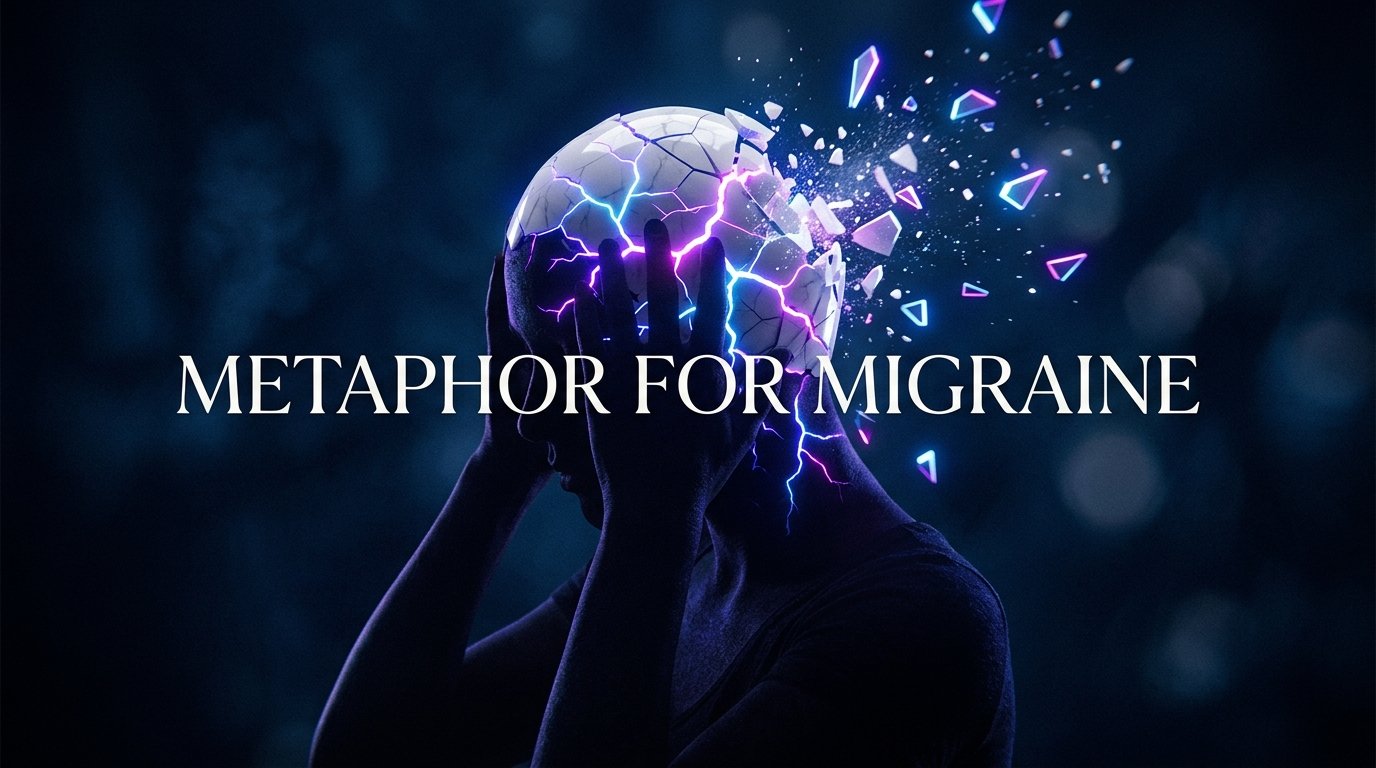
Metaphor for Migraine Crossword: Answer, Meaning, Clue Guide
If you are solving a crossword with the clue “Metaphor for a migraine,” the answer is VISE.
It has 4 letters and describes something that grips or squeezes tightly, which makes it a fitting metaphor for the intense pressure of a migraine.
The exact clue appeared in a New York Times crossword on November 19, 2023.
People often search this clue because crossword puzzles use short, indirect descriptions rather than simply defining the answer.
“Metaphor for a migraine” does not mean that vise is another medical word for migraine. Instead, the clue asks for an object that can figuratively represent the squeezing feeling associated with severe head pain.
This updated 2026 guide explains the answer, why VISE works, related migraine crossword clues, alternative expressions, examples, and practical ways to recognize similar metaphor clues.
If you know the number of letters in your puzzle, the answer becomes much easier to confirm.
Definition & Meaning
VISE is the crossword answer for “Metaphor for a migraine.” A vise is a tool that holds something tightly by pressing it between two surfaces. In the crossword clue, the word is used figuratively: a migraine can feel as if the head is being squeezed in a vise.
Simple definition
Vise: a tool that grips an object tightly.
Metaphorically: something that feels like strong pressure or squeezing.
So, the clue works like this:
Metaphor for a migraine → VISE
The word vise does not mean migraine. It is a metaphorical comparison.
Why does “vise” fit a migraine?
Imagine a metal tool slowly tightening around an object. That image gives the reader a simple way to picture strong pressure.
A migraine can involve severe head pain and other symptoms. The crossword setter uses the image of a vise to suggest tightness, pressure, and gripping pain.
Quick summary table
| Clue | Answer | Letters | Why it fits |
|---|---|---|---|
| Metaphor for a migraine | VISE | 4 | A vise grips tightly |
| Migraine | HEADACHE | 8 | Common crossword answer for migraine |
| Migraine warning | AURA | 4 | Aura can occur before or during some migraines |
| Migraine symptoms | AURAS | 5 | Auras can be migraine symptoms |
| Pre-migraine experience, for some | AURA | 4 | Aura can precede migraine symptoms |
The exact clue “Metaphor for a migraine” has been recorded with VISE as the answer.
Why We Use “Metaphor for a Migraine”
The clue uses a metaphor because crossword puzzles often describe an answer indirectly. Instead of saying “four-letter tool that grips tightly,” the setter gives the more playful phrase “Metaphor for a migraine.” The solver must connect the idea of squeezing pain with the object vise.
Practical purpose
The clue tests your ability to recognize figurative meaning.
A migraine is not literally a vise. The clue asks you to imagine what a migraine might feel like and then find an object that creates that image.
Everyday usage
You might hear someone say:
- “My head feels like it is in a vise.”
- “It feels as if someone is squeezing my head.”
- “This headache has my head in a grip.”
These are figurative descriptions, not medical definitions.
Writing
Writers use metaphors to make pain easier to picture.
For example:
“The migraine felt like a vise tightening around his head.”
The reader can quickly understand the feeling without a long medical explanation.
Speaking
In casual speech, someone may say:
“My head feels like it’s caught in a vise.”
This can communicate the intensity of pain in a vivid way.
School
This clue can also be useful when learning about metaphors. Students can see that a metaphor compares one experience with another without using “like” or “as.”
Social media
People sometimes use short metaphors to describe difficult experiences:
“Today’s migraine feels like a vise around my head.”
The image is quick and easy to understand.
Professional communication
In a workplace, a direct statement is usually clearer:
“I have a severe migraine and need to rest.”
A metaphor such as “my head is in a vise” can sound more informal.
Main Section: 60+ Examples of Migraine Metaphors
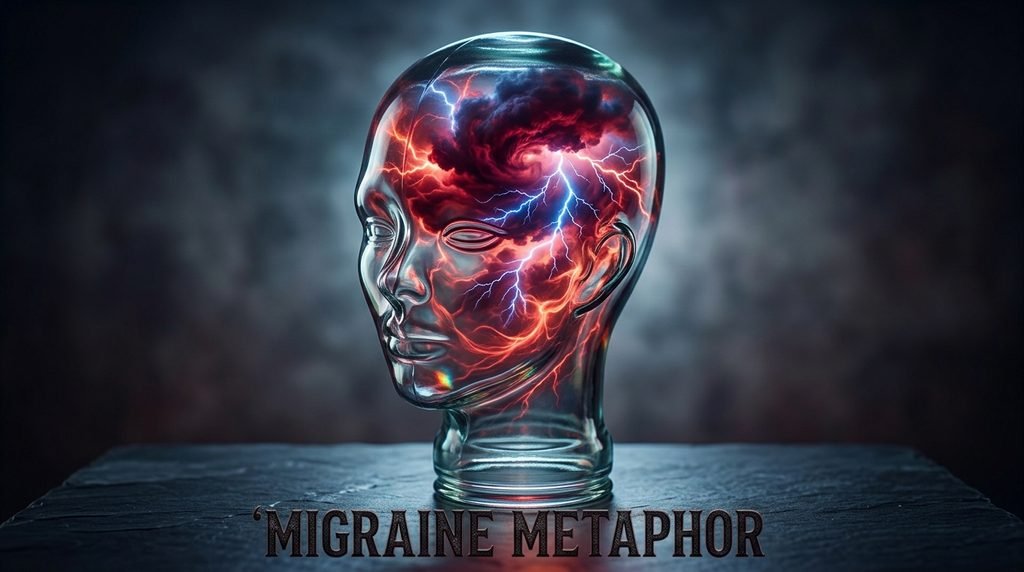
The central crossword answer is VISE, but many other metaphors can describe the feeling of a migraine. These examples are language examples, not medical descriptions or diagnoses.
1. A Vise
Meaning: A tight, squeezing pressure.
Real explanation: A vise grips an object firmly, so it creates a strong image of pressure around the head.
Sample sentence: “The migraine felt like a vise tightening around my head.”
When to use it: When describing strong squeezing pain.
When NOT to use it: In a medical report where precise symptoms are needed.
Alternatives: tight grip; crushing pressure; squeezing pain.
Difficulty: Easy
Tone: Neutral
2. A Tight Band
Meaning: Pressure wrapped around the head.
Real explanation: A tight band suggests something pressing from the outside.
Sample sentence: “It felt like a tight band around my forehead.”
When to use it: Casual descriptions of head pressure.
When NOT to use it: When you need to identify the exact cause of pain.
Alternatives: headband; tight ring; pressure belt.
Difficulty: Easy
Tone: Neutral
3. A Clamp
Meaning: Strong pressure holding something tightly.
Real explanation: A clamp closes around an object, creating an image similar to gripping pressure.
Sample sentence: “The pain felt like a clamp around my skull.”
When to use it: Creative writing.
When NOT to use it: Formal medical communication.
Alternatives: grip; vise; squeeze.
Difficulty: Easy
Tone: Informal
4. A Pressure Cooker
Meaning: Pressure that keeps building.
Real explanation: A pressure cooker represents increasing internal pressure.
Sample sentence: “My head felt like a pressure cooker.”
When to use it: Strong figurative writing.
When NOT to use it: Precise medical descriptions.
Alternatives: boiling pressure; building tension; sealed pressure.
Difficulty: Easy
Tone: Informal
5. A Hammer
Meaning: Repeated, forceful pain.
Real explanation: A hammer suggests repeated pounding.
Sample sentence: “It felt like a hammer was hitting my head.”
When to use it: Describing pounding pain.
When NOT to use it: If the pain does not feel rhythmic or pounding.
Alternatives: pounding; beating; thumping.
Difficulty: Easy
Tone: Informal
6. A Drumbeat
Meaning: Repeated pulsing pain.
Real explanation: A drumbeat gives an image of steady, repeated impact.
Sample sentence: “A drumbeat seemed to pulse inside my head.”
When to use it: Creative descriptions.
When NOT to use it: When explaining symptoms to a doctor.
Alternatives: pulse; throb; beat.
Difficulty: Easy
Tone: Creative
7. A Storm
Meaning: A powerful experience that arrives and takes over.
Real explanation: A storm can represent something intense and difficult to control.
Sample sentence: “The migraine swept through my head like a storm.”
When to use it: Stories and personal writing.
When NOT to use it: Crossword clues requiring a specific answer.
Alternatives: thunderstorm; hurricane; tempest.
Difficulty: Easy
Tone: Creative
8. A Thunderstorm
Meaning: Loud, overwhelming discomfort.
Real explanation: Thunder and lightning create a vivid image of sensory overload.
Sample sentence: “My head felt like a thunderstorm was trapped inside it.”
When to use it: Poetry or creative writing.
When NOT to use it: Formal communication.
Alternatives: storm; thunder; lightning.
Difficulty: Easy
Tone: Creative
9. A Fire
Meaning: Burning or intense pain.
Real explanation: Fire represents heat and intensity.
Sample sentence: “It felt as if a small fire had started behind my eyes.”
When to use it: Descriptive writing.
When NOT to use it: If your actual sensation is not burning.
Alternatives: flame; heat; blaze.
Difficulty: Easy
Tone: Creative
10. A Furnace
Meaning: Intense heat or pressure.
Real explanation: A furnace creates an image of extreme heat.
Sample sentence: “My head felt like a furnace.”
When to use it: Figurative writing.
When NOT to use it: Precise symptom reporting.
Alternatives: oven; fire; heat chamber.
Difficulty: Medium
Tone: Creative
11. A Drill
Meaning: Sharp, repeated pressure.
Real explanation: A drill suggests an intense sensation focused in one area.
Sample sentence: “The pain felt like a drill behind my eye.”
When to use it: Vivid personal descriptions.
When NOT to use it: If the sensation is not sharp.
Alternatives: spike; needle; piercing pain.
Difficulty: Easy
Tone: Informal
12. A Needle
Meaning: Sharp, pointed pain.
Real explanation: A needle gives a simple image of something small and painfully sharp.
Sample sentence: “It felt like a needle was pressing behind my eye.”
When to use it: Describing sharp sensations.
When NOT to use it: When the pain is dull or heavy.
Alternatives: pin; spike; prick.
Difficulty: Easy
Tone: Neutral
13. A Hammer and Anvil
Meaning: Pressure from repeated impact.
Real explanation: The image suggests something being struck between two hard surfaces.
Sample sentence: “My head felt trapped between a hammer and an anvil.”
When to use it: Strong creative descriptions.
When NOT to use it: Short everyday speech.
Alternatives: pounding; crushing pressure; heavy blows.
Difficulty: Medium
Tone: Creative
14. A Heavy Weight
Meaning: A feeling of heaviness.
Real explanation: A weight represents pressure and burden.
Sample sentence: “It felt like a heavy weight was sitting on my head.”
When to use it: Explaining heavy discomfort.
When NOT to use it: Sharp-pain descriptions.
Alternatives: burden; load; weight.
Difficulty: Easy
Tone: Neutral
15. A Brick
Meaning: Heavy, solid pressure.
Real explanation: A brick creates an image of something hard and heavy.
Sample sentence: “My head felt as heavy as a brick.”
When to use it: Casual descriptions.
When NOT to use it: Formal medical writing.
Alternatives: stone; block; weight.
Difficulty: Easy
Tone: Informal
16. A Stone
Meaning: Hard and heavy pressure.
Real explanation: Stone suggests weight and hardness.
Sample sentence: “It felt like a stone was pressing against my forehead.”
When to use it: Personal writing.
When NOT to use it: Precise clinical communication.
Alternatives: rock; block; weight.
Difficulty: Easy
Tone: Neutral
17. A Rock
Meaning: Heavy pressure.
Real explanation: A rock represents something solid and difficult to move.
Sample sentence: “My head felt like someone had placed a rock inside it.”
When to use it: Casual speech.
When NOT to use it: Formal descriptions.
Alternatives: stone; block; weight.
Difficulty: Easy
Tone: Informal
18. A Fog
Meaning: Difficulty thinking clearly.
Real explanation: Fog is commonly used as an image for unclear thinking.
Sample sentence: “A thick fog seemed to cover my thoughts.”
When to use it: Describing mental cloudiness.
When NOT to use it: As a substitute for reporting actual symptoms.
Alternatives: haze; cloud; mist.
Difficulty: Easy
Tone: Neutral
19. A Cloud
Meaning: Mental heaviness or unclear thoughts.
Real explanation: A cloud can hide what is underneath it.
Sample sentence: “A dark cloud seemed to hang over my thoughts.”
When to use it: Creative writing.
When NOT to use it: Medical records.
Alternatives: fog; haze; shadow.
Difficulty: Easy
Tone: Creative
20. A Cage
Meaning: Feeling trapped.
Real explanation: A cage represents restriction and lack of escape.
Sample sentence: “The migraine made my head feel like a locked cage.”
When to use it: Emotional writing.
When NOT to use it: When describing a specific physical sensation.
Alternatives: prison; trap; box.
Difficulty: Easy
Tone: Creative
21. A Prison
Meaning: Feeling unable to escape discomfort.
Real explanation: A prison represents being trapped.
Sample sentence: “The migraine felt like a prison I could not leave.”
When to use it: Personal essays.
When NOT to use it: Short factual messages.
Alternatives: cage; trap; confinement.
Difficulty: Easy
Tone: Emotional
22. A Trap
Meaning: Something difficult to escape.
Real explanation: A trap captures something and prevents easy escape.
Sample sentence: “The pain felt like a trap closing around me.”
When to use it: Creative descriptions.
When NOT to use it: Formal writing.
Alternatives: cage; snare; prison.
Difficulty: Easy
Tone: Informal
23. A Siren
Meaning: A loud warning signal.
Real explanation: A siren represents an intense warning that demands attention.
Sample sentence: “The pain was like a siren going off inside my head.”
When to use it: Explaining overwhelming sensations.
When NOT to use it: If you need a literal description.
Alternatives: alarm; warning bell; alert.
Difficulty: Easy
Tone: Informal
24. An Alarm Bell
Meaning: A strong warning.
Real explanation: An alarm bell signals that something needs attention.
Sample sentence: “My head felt like an alarm bell that would not stop ringing.”
When to use it: Creative writing.
When NOT to use it: Medical diagnosis.
Alternatives: siren; alarm; warning.
Difficulty: Easy
Tone: Creative
25. A Whistle
Meaning: A sharp, intrusive sensation.
Real explanation: A whistle can represent an unwanted sound or sensation.
Sample sentence: “The pain was like a whistle inside my skull.”
When to use it: Creative writing.
When NOT to use it: When the symptom is not sound-like.
Alternatives: ringing; buzz; shriek.
Difficulty: Easy
Tone: Creative
26. A Buzzing Wire
Meaning: Constant irritating sensation.
Real explanation: An electrical wire suggests an ongoing buzzing feeling.
Sample sentence: “My head felt like a buzzing wire.”
When to use it: Informal descriptions.
When NOT to use it: Formal symptom descriptions.
Alternatives: hum; buzz; vibration.
Difficulty: Medium
Tone: Creative
27. A Broken Radio
Meaning: Unwanted noise that will not stop.
Real explanation: A broken radio can represent constant mental disturbance.
Sample sentence: “My thoughts felt like a broken radio.”
When to use it: Creative writing.
When NOT to use it: Professional messages.
Alternatives: static; noise; interference.
Difficulty: Easy
Tone: Creative
28. Static
Meaning: Mental or sensory noise.
Real explanation: Radio static suggests unclear and unwanted signals.
Sample sentence: “My mind was full of static.”
When to use it: Describing difficulty focusing.
When NOT to use it: When you need literal language.
Alternatives: noise; interference; fuzz.
Difficulty: Easy
Tone: Neutral
29. A Glitch
Meaning: Something suddenly not working normally.
Real explanation: A computer glitch gives an image of temporary disruption.
Sample sentence: “My brain felt like it had hit a glitch.”
When to use it: Informal modern writing.
When NOT to use it: Formal medical communication.
Alternatives: error; fault; malfunction.
Difficulty: Easy
Tone: Informal
30. A Traffic Jam
Meaning: Everything feels blocked or slowed.
Real explanation: Traffic cannot move freely during a jam.
Sample sentence: “My thoughts felt like a traffic jam.”
When to use it: Describing difficulty thinking.
When NOT to use it: Describing actual pain location.
Alternatives: bottleneck; blockage; gridlock.
Difficulty: Easy
Tone: Informal
31. Gridlock
Meaning: Complete blockage.
Real explanation: Gridlock suggests movement has almost stopped.
Sample sentence: “The migraine left my thoughts in gridlock.”
When to use it: Creative descriptions of mental difficulty.
When NOT to use it: Formal symptom reporting.
Alternatives: blockage; standstill; jam.
Difficulty: Medium
Tone: Neutral
32. A Wall
Meaning: A barrier that blocks normal thinking.
Real explanation: A wall represents something that prevents progress.
Sample sentence: “A wall seemed to rise between me and my thoughts.”
When to use it: Essays and stories.
When NOT to use it: Medical instructions.
Alternatives: barrier; block; obstacle.
Difficulty: Easy
Tone: Neutral
33. A Locked Door
Meaning: Something difficult to access.
Real explanation: A locked door represents blocked thought or concentration.
Sample sentence: “Every simple thought felt like a locked door.”
When to use it: Creative writing.
When NOT to use it: Quick practical communication.
Alternatives: barrier; wall; block.
Difficulty: Easy
Tone: Creative
34. A Vice Grip
Meaning: Very strong control or pressure.
Real explanation: It creates an even stronger version of the vise image.
Sample sentence: “It felt like a vice grip around my head.”
When to use it: Strong figurative speech.
When NOT to use it: If your crossword specifically requires the four-letter answer VISE.
Alternatives: clamp; vise; tight grip.
Difficulty: Easy
Tone: Informal
35. A Tight Rope
Meaning: Stress or tension.
Real explanation: A tight rope suggests strain and tension.
Sample sentence: “My head felt stretched like a tight rope.”
When to use it: Creative writing.
When NOT to use it: Medical explanations.
Alternatives: tension; strain; pull.
Difficulty: Medium
Tone: Creative
36. A Spring
Meaning: Pressure building up.
Real explanation: A compressed spring stores energy and pushes back.
Sample sentence: “The pressure in my head felt like a compressed spring.”
When to use it: Explaining building pressure.
When NOT to use it: When describing a steady ache.
Alternatives: coil; tension; pressure.
Difficulty: Medium
Tone: Creative
37. A Balloon
Meaning: Pressure that seems to increase.
Real explanation: An inflated balloon gives an easy image of growing pressure.
Sample sentence: “My head felt like a balloon filling with pressure.”
When to use it: Simple explanations.
When NOT to use it: Precise clinical descriptions.
Alternatives: bubble; balloon; inflated sphere.
Difficulty: Easy
Tone: Neutral
38. A Drum
Meaning: Rhythmic pounding.
Real explanation: A drum produces repeated beats.
Sample sentence: “My head was beating like a drum.”
When to use it: Describing pulsing sensations.
When NOT to use it: If the pain is not rhythmic.
Alternatives: heartbeat; throb; beat.
Difficulty: Easy
Tone: Informal
39. A Train
Meaning: Powerful movement that keeps going.
Real explanation: A train suggests force and momentum.
Sample sentence: “The migraine rolled through my head like a heavy train.”
When to use it: Creative writing.
When NOT to use it: Formal descriptions.
Alternatives: engine; machine; force.
Difficulty: Easy
Tone: Creative
40. A Wave
Meaning: Pain that rises and falls.
Real explanation: A wave moves forward and changes in strength.
Sample sentence: “The pain came over me like a wave.”
When to use it: Describing changing intensity.
When NOT to use it: If the pain stays constant.
Alternatives: swell; surge; tide.
Difficulty: Easy
Tone: Neutral
41. A Tide
Meaning: A feeling that comes and goes.
Real explanation: Tides rise and fall.
Sample sentence: “The pressure came in like a dark tide.”
When to use it: Poetry and personal writing.
When NOT to use it: Medical instructions.
Alternatives: wave; surge; flow.
Difficulty: Medium
Tone: Creative
42. A Surge
Meaning: A sudden increase.
Real explanation: A surge represents something becoming stronger quickly.
Sample sentence: “A surge of pain moved through my head.”
When to use it: Describing changes in intensity.
When NOT to use it: If the sensation remains stable.
Alternatives: rush; wave; burst.
Difficulty: Easy
Tone: Neutral
43. A Lightning Strike
Meaning: Sudden, sharp pain.
Real explanation: Lightning suggests speed and intensity.
Sample sentence: “The pain struck like lightning.”
When to use it: Very vivid writing.
When NOT to use it: If the pain is slow and steady.
Alternatives: flash; bolt; strike.
Difficulty: Easy
Tone: Creative
44. A Flash
Meaning: A sudden sensation.
Real explanation: A flash happens quickly.
Sample sentence: “A flash of pain crossed my head.”
When to use it: Short descriptions.
When NOT to use it: Chronic steady discomfort.
Alternatives: spark; burst; flicker.
Difficulty: Easy
Tone: Neutral
45. A Spark
Meaning: A small but sudden start.
Real explanation: A spark can represent the beginning of an intense feeling.
Sample sentence: “A small spark of pain began behind my eye.”
When to use it: Describing the beginning of a sensation.
When NOT to use it: Severe constant pain.
Alternatives: flash; flicker; ember.
Difficulty: Easy
Tone: Creative
46. An Ember
Meaning: A low but lasting heat.
Real explanation: An ember continues glowing after a fire fades.
Sample sentence: “The pain stayed like a hot ember.”
When to use it: Lingering discomfort in creative writing.
When NOT to use it: Sudden sharp pain.
Alternatives: coal; glow; spark.
Difficulty: Medium
Tone: Creative
47. A Shadow
Meaning: Something that follows you.
Real explanation: A shadow stays close and can represent lingering discomfort.
Sample sentence: “The headache followed me like a shadow.”
When to use it: Long-lasting discomfort.
When NOT to use it: When discussing a precise symptom.
Alternatives: cloud; burden; presence.
Difficulty: Easy
Tone: Creative
48. A Monster
Meaning: A powerful problem that feels hard to control.
Real explanation: A monster represents something frightening and difficult.
Sample sentence: “The migraine returned like a monster.”
When to use it: Personal storytelling.
When NOT to use it: Professional communication.
Alternatives: beast; enemy; giant.
Difficulty: Easy
Tone: Emotional
49. A Beast
Meaning: A powerful and difficult force.
Real explanation: A beast creates an image of something that must be managed.
Sample sentence: “Another migraine felt like facing the same beast again.”
When to use it: Personal essays.
When NOT to use it: Formal writing.
Alternatives: monster; enemy; force.
Difficulty: Easy
Tone: Emotional
50. An Enemy
Meaning: Something that works against you.
Real explanation: An enemy represents an unwanted force.
Sample sentence: “The migraine felt like an enemy at the door.”
When to use it: Personal writing.
When NOT to use it: Medical explanations.
Alternatives: opponent; foe; threat.
Difficulty: Easy
Tone: Emotional
51. A Thief
Meaning: Something that takes away your time or energy.
Real explanation: A thief represents loss.
Sample sentence: “The migraine was a thief that stole my afternoon.”
When to use it: Essays and social posts.
When NOT to use it: Formal workplace communication.
Alternatives: robber; taker; drain.
Difficulty: Easy
Tone: Creative
52. A Thief of Time
Meaning: Something that takes useful time away.
Real explanation: The metaphor focuses on lost time rather than physical pain.
Sample sentence: “Another migraine became a thief of time.”
When to use it: Personal writing.
When NOT to use it: Medical records.
Alternatives: time drain; setback; interruption.
Difficulty: Easy
Tone: Creative
53. A Battery Drain
Meaning: Loss of energy.
Real explanation: A device with a drained battery cannot work normally.
Sample sentence: “The migraine felt like a battery drain.”
When to use it: Casual modern speech.
When NOT to use it: Formal writing.
Alternatives: energy drain; exhaustion; depletion.
Difficulty: Easy
Tone: Informal
54. A Power Cut
Meaning: Sudden loss of normal function.
Real explanation: A power cut stops electrical systems from working.
Sample sentence: “The migraine felt like a power cut in my brain.”
When to use it: Informal explanations.
When NOT to use it: Scientific writing.
Alternatives: shutdown; blackout; outage.
Difficulty: Easy
Tone: Informal
55. A Shutdown
Meaning: Normal activity stops.
Real explanation: Shutdown describes something becoming inactive.
Sample sentence: “The pain forced my whole day into shutdown mode.”
When to use it: Casual descriptions.
When NOT to use it: As a medical diagnosis.
Alternatives: stop; freeze; blackout.
Difficulty: Easy
Tone: Informal
56. A Blackout
Meaning: A period when normal awareness or activity seems interrupted.
Real explanation: The word creates a strong image of darkness or interruption.
Sample sentence: “The rest of the afternoon felt like a blackout.”
When to use it: Creative writing.
When NOT to use it: If you did not actually lose consciousness.
Alternatives: shutdown; darkness; interruption.
Difficulty: Easy
Tone: Informal
57. A Heavy Curtain
Meaning: Something blocking normal awareness.
Real explanation: A curtain can hide what is behind it.
Sample sentence: “A heavy curtain seemed to cover my thoughts.”
When to use it: Creative writing.
When NOT to use it: Medical reporting.
Alternatives: veil; fog; screen.
Difficulty: Medium
Tone: Creative
58. A Veil
Meaning: Something that makes things unclear.
Real explanation: A veil partially hides what lies underneath.
Sample sentence: “A veil seemed to settle over my mind.”
When to use it: Poetry and essays.
When NOT to use it: Casual workplace messages.
Alternatives: haze; fog; curtain.
Difficulty: Medium
Tone: Creative
59. A Heavy Blanket
Meaning: A feeling of weight and dullness.
Real explanation: A heavy blanket can represent pressure and tiredness.
Sample sentence: “The migraine felt like a heavy blanket over my head.”
When to use it: Personal descriptions.
When NOT to use it: Exact medical communication.
Alternatives: weight; cloud; burden.
Difficulty: Easy
Tone: Neutral
60. A Cage of Noise
Meaning: Feeling trapped by overwhelming sound.
Real explanation: The cage represents being trapped, while noise represents sensory overload.
Sample sentence: “Every sound turned into a cage of noise.”
When to use it: Creative writing.
When NOT to use it: Formal medical writing.
Alternatives: noise trap; sound wall; sensory storm.
Difficulty: Medium
Tone: Creative
61. A Sensory Storm
Meaning: Many uncomfortable sensations arriving together.
Real explanation: A storm represents several powerful forces happening at once.
Sample sentence: “The migraine felt like a sensory storm.”
When to use it: Explaining a complex experience.
When NOT to use it: As a diagnosis.
Alternatives: sensory overload; storm; flood.
Difficulty: Medium
Tone: Neutral
62. A Flood
Meaning: Too much information or sensation at once.
Real explanation: A flood overwhelms an area with more water than it can handle.
Sample sentence: “Light and noise felt like a flood.”
When to use it: Describing overwhelming surroundings.
When NOT to use it: Formal medical documentation.
Alternatives: rush; wave; overload.
Difficulty: Easy
Tone: Creative
63. An Overloaded Circuit
Meaning: Too much activity at once.
Real explanation: An overloaded circuit gives a modern image of excessive input.
Sample sentence: “My brain felt like an overloaded circuit.”
When to use it: Informal explanations.
When NOT to use it: Scientific claims about how migraine literally works.
Alternatives: glitch; overload; short circuit.
Difficulty: Medium
Tone: Informal
64. A Short Circuit
Meaning: Sudden disruption.
Real explanation: The metaphor suggests that normal mental activity has been interrupted.
Sample sentence: “The migraine made my thoughts feel like a short circuit.”
When to use it: Casual speech.
When NOT to use it: Literal medical explanations.
Alternatives: glitch; shutdown; overload.
Difficulty: Easy
Tone: Informal
65. A Pressure Wave
Meaning: A strong wave of pressure.
Real explanation: A wave suggests movement and changing intensity.
Sample sentence: “A pressure wave seemed to move across my head.”
When to use it: Descriptive writing.
When NOT to use it: Presenting a metaphor as a medical mechanism.
Alternatives: surge; wave; pressure.
Difficulty: Medium
Tone: Neutral
Real-Life Conversations
Conversation 1: Friends
Sam: “You look exhausted. What happened?”
Alex: “Migraine. It feels like someone put my head in a vise.”
Sam: “Want me to turn the lights down?”
Alex: “Yes, please. That would help.”
Here, vise gives a quick picture of strong pressure.
Conversation 2: Family
Mom: “Are you feeling okay?”
Daughter: “Not really. My head feels like a tight band.”
Mom: “Do you need some quiet?”
Daughter: “Yes. I think I need to lie down.”
The metaphor makes the description easy to understand.
Conversation 3: Student
Student: “I can’t focus on my assignment.”
Teacher: “What’s wrong?”
Student: “I have a migraine. My thoughts feel like traffic.”
Teacher: “Take a break and let me know when you’re ready.”
Here, traffic describes blocked or slow thinking.
Conversation 4: Office
Coworker: “Can you join the meeting?”
Employee: “I have a migraine and need to step away from the screen.”
Coworker: “No problem. I’ll send you the notes.”
For professional communication, the direct statement is clearer than a metaphor.
Conversation 5: Text Message
Friend: “Movie tonight?”
You: “I can’t today. My migraine feels like a storm. I need a quiet room.”
This is natural in a casual text because the metaphor adds emotion without replacing the basic message.
Everyday Usage
These metaphors can appear in many kinds of communication, but the best choice depends on the situation.
Conversation
In everyday speech, short metaphors work well:
“My head feels like it’s in a vise.”
People usually understand the image immediately.
Writing
Creative writing gives you more freedom:
“A storm gathered behind her eyes.”
The goal is to help readers feel the scene.
Books
Authors may use metaphors to show pain without giving a long medical explanation. A vise, storm, shadow, or weight can communicate emotion quickly.
Movies
Characters may say:
“It feels like someone is drilling into my head.”
This type of line is easy for viewers to understand.
Poetry
“A dark storm beats against my skull.”
does not need to describe symptoms in clinical language.
Emails
In a work email, clarity usually matters more:
“I have a migraine and need to take the afternoon off.”
A metaphor can sound less direct.
Text Messages
Casual texts allow more creative language:
“My head is in a vise today.”
A short caption might say:
“Migraine day. My brain feels like an overloaded circuit.”
A longer post can explain the experience with several images, but it should make clear that the language is figurative.
X
Short metaphors work well because they communicate an idea quickly:
“Today’s migraine feels like a vise.”
Professional platforms call for more direct wording:
“I’m dealing with a migraine today and may be slower to respond.”
School Assignments
If you are asked to identify a metaphor, “My head feels like a vise” can be discussed as a comparison between migraine pain and the tight grip of a vise.
Related Crossword Clues About Migraine
The exact phrase “Metaphor for a migraine” points to VISE, but migraine-related crossword clues can have different answers.
For example, “Migraine” has been listed with HEADACHE, an 8-letter answer, in crossword references.
Another clue, “Migraine warning,” has the answer AURA, which has four letters.
Likewise, “Migraine symptoms” can lead to AURAS, a five-letter answer.
| Crossword clue | Likely answer | Letters |
|---|---|---|
| Metaphor for a migraine | VISE | 4 |
| Migraine | HEADACHE | 8 |
| Migraine warning | AURA | 4 |
| Migraine symptoms | AURAS | 5 |
| Pre-migraine experience, for some | AURA | 4 |
The clue wording and number of squares matter. Do not automatically use VISE for every crossword clue containing the word “migraine.”
Common Mistakes When Solving “Metaphor for a Migraine”
Mistake 1: Looking only for a medical term
The clue does not ask for a medical synonym. It asks for a metaphor.
That is why VISE works.
Mistake 2: Choosing “headache”
HEADACHE is a common crossword answer for “migraine,” but it does not fit the specific wording “Metaphor for a migraine.”
Mistake 3: Ignoring the letter count
If the puzzle has four squares, VISE is a strong match.
If it has eight squares, another answer may be required.
Mistake 4: Confusing “aura” with the metaphor clue
AURA is associated with migraine-related clues, especially clues about warnings or pre-migraine experiences. But it is not the answer to the exact clue “Metaphor for a migraine.”
Mistake 5: Taking the metaphor literally
A migraine does not literally place a vise around someone’s head. The crossword is using the image to describe tight pressure.
FAQs:
What is the answer to “Metaphor for a migraine” in a crossword?
The answer is VISE, with 4 letters. The clue appeared in a New York Times crossword, and crossword references list VISE as the solution.
Why is “vise” a metaphor for a migraine?
A vise is a tool that grips an object tightly. A migraine can be described figuratively as feeling like a tight grip around the head. The clue uses that image rather than giving a direct medical definition.
Is “vise” another word for migraine?
No. Vise is not a medical synonym for migraine. It is a figurative answer to the crossword clue.
How many letters is VISE?
VISE has four letters: V-I-S-E.
What is a common crossword answer for “migraine”?
HEADACHE is a common answer when the clue simply defines “migraine,” and it has eight letters.
What is a four-letter migraine warning in a crossword?
A common answer is AURA. Crossword references list AURA for the clue “Migraine warning.”
What are migraine symptoms in a crossword?
AURAS is a five-letter answer found for the clue “Migraine symptoms.”
Is “vise” a metaphor or simile?
In a sentence such as “My head is a vise,” it is a metaphor.
In “My head feels like a vise,” it is a simile because it uses “like.”
What is the easiest way to solve this clue?
Look at three things:
- The exact clue wording.
- The number of letters.
- The surrounding crossing letters.
For the exact clue “Metaphor for a migraine” with four squares, VISE is the documented answer.
Final Answer:
If your crossword clue is exactly:
Metaphor for a migraine
the answer is:
VISE 4 letters
The word works because a vise grips and squeezes tightly, creating a clear metaphor for the pressure associated with a migraine.
The clue is documented from a New York Times crossword dated November 19, 2023.
If your clue is simply “Migraine,” however, check the letter count and crossing letters because HEADACHE is a common eight-letter answer.
Discover more post:
| https://metaphorcraftz.com/metaphor-for-a-roller-coaster/ |
| https://metaphorcraftz.com/a-metaphor-for-hope/ |
| https://metaphorcraftz.com/metaphor-for-clever/ |

Liora is a passionate writer, language enthusiast, and experienced content creator with 5 years of experience researching and writing about metaphors, figurative language, literary devices, symbolism, and the deeper meanings behind everyday words and expressions.
Related Post

A Metaphor for School: Creative Examples, Meanings
Search intent: People searching for “a metaphor for school” usually want creative ways to describe…
2 thoughts on “Metaphor for Migraine Crossword: Answer, Meaning, Clue Guide”